Namibia vs South Africa vs Zimbabwe: A T20I Showdown in Windhoek
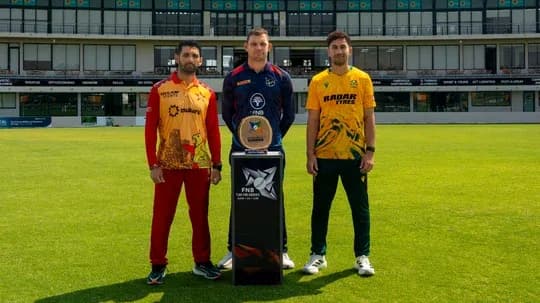
Lavender, leather and a point to prove. The outer edge of the Namibia Cricket Ground in Windhoek smells more like a garden than a gladiatorial arena, but over the next 10 days it will host something far more combustible than flowers: a three-way T20I scrap between Namibia, South Africa and Zimbabwe.
In a country defined by hard lines and harsher light, the NCG has grown into one of the most striking new venues in the game. It has hosted 17 completed men’s white-ball internationals, as many women’s T20Is and eight men’s under-19 ODIs since March last year. This, though, is its real debut. Its close-up. Its first series involving two ICC Full Member sides.
And one of those Full Members already bears a scar from this place.
The memory that won’t fade
Ask any South African who was in Windhoek last October. They don’t talk about Namibia’s four-wicket win as an upset. They talk about being outplayed.
Namibia’s last-ball victory in that T20I – their first ever meeting with South Africa in any format – still echoes around the ground. The Eagles didn’t sneak it; they seized it. As Gerhard Erasmus has been quick to remind anyone who’ll listen, this is exactly what the format allows: “The T20 format gives you the ability to impact the game. If you have two star performers on the day you could swing the result your way.”
Bjorn Fortuin, now captaining a youthful South Africa here, didn’t sugar-coat it either at Thursday’s press conference: “The reality was we got beaten by the better team on the day.” No talk of flukes. No excuses. Just a painful, clear-eyed memory.
That result has shaped the mood heading into Friday’s opener. Namibia are not turning up for a photo opportunity. Zimbabwe are not flying in to make up the numbers. And South Africa, with an experimental squad, walk straight into a tournament laced with jeopardy.
A southern African way of cricket
From Friday, August 28, 2026 to Sunday, September 6, 2026, the schedule is tight and unforgiving. Only three off-days. Each team asked to go back-to-back on consecutive days at least once. Mistakes will be punished. Fatigue will be a factor.
The conditions should help keep the cricket honest. Afternoon starts at 2pm local time in Windhoek – the same for South Africa and Zimbabwe, 5.30pm IST – under sunshine and mid-to-upper 20s Celsius. It sounds benign. The numbers say otherwise.
In 13 men’s T20Is at the NCG, totals of 200 or more have been reached only three times. Two centuries, eight fifties. Six four-wicket hauls. Four of those by seamers. There is something here for the quicks, something for the spinners, and not much charity for batters who try to hit their way out of trouble from ball one.
It’s the perfect stage for what might, by the end of these 10 days, feel like a distinctly southern African brand of T20 cricket: bristling pace, dagger-sharp fielding, flinty batting and a refusal to lie down even when the equation looks impossible.
Namibia: the hosts with a taste for blood
Namibia arrive with confidence and continuity – and a couple of intriguing wrinkles.
Justin Kemp, the former South Africa allrounder, now sits in the home dugout as assistant coach, a reminder that the cricketing lines between these countries are porous, their stories intertwined. Michael van Lingen, who last played T20I cricket at the 2024 World Cup, has come out of retirement to rejoin the fight.
Erasmus leads a side that knows exactly what it is: aggressive at the top, stubborn in the middle, streetwise with the ball. A possible XI of Jan-Nicol Loftie-Eaton, Junior Taanyanda, Erasmus himself, Alex Busing-Volschenk, Zane Green, JC Balt, Jan Frylinck, Max Heingo, Bernard Scholtz, Waldo Smith and Jack Brassell is not a line-up built to admire the scenery.
They will look at the memory of last October not as a one-off, but as a template.
South Africa: talent, risk and a bruise to heal
South Africa, by contrast, have rolled the dice. This is not a full-strength side; it is a laboratory.
Jason Smith has already been ruled out with an inner thigh strain. Eathan Bosch has yet to play T20I cricket. Duan Jansen hasn’t debuted in any international format. The possible XI – Tony de Zorzi, Lhuan-dré Pretorius, Connor Esterhuizen, Dewald Brevis, Rubin Hermann, Prenelan Subrayen, Jansen, Fortuin, Kwena Maphaka, Lutho Sipamla, Nqobani Mokoena – crackles with potential but lacks the weight of caps.
There is pace in Maphaka and Jansen, craft in Fortuin and Subrayen, and box-office promise in Brevis. What there isn’t is much margin for error. On a ground where 200 is a rarity and bowlers stay in the game, inexperience can be exposed quickly.
Fortuin insists last year’s defeat has not left “scars or underlying issues”, but that doesn’t mean the memory has faded. For a group trying to elbow their way into future World Cup plans, this series is more than a development exercise. Lose to Namibia again, and the narrative shifts from “opportunity” to “problem” in a heartbeat.
Zimbabwe: hardened, dangerous, and missing a spearhead
Zimbabwe arrive with their own edge. Graeme Cremer is back from an arm injury that kept him out for more than 17 months, his legspin and experience adding depth to a side that already leans heavily on the all-round brilliance of Sikandar Raza.
They will, though, feel the absence of Richard Ngarava, ruled out by a lower back problem. His left-arm pace is a big hole to fill. Brendon Taylor has been dropped, another sign of a team trying to move on decisively rather than linger on past glories.
Even so, the possible XI – Brian Bennett, Ben Curran, Dion Myers, Raza (capt), Wessly Madhevere, Tadiwanashe Marumani, Brad Evans, Newman Nyamhuri, Cremer, Wellington Masakadza, Blessing Muzarabani – has bite. Muzarabani’s height and bounce, Evans’ hustle, Cremer’s guile and Raza’s ability to change a game with bat or ball make Zimbabwe a threat in any conditions, let alone on a surface that has historically rewarded disciplined bowling.
Beer, bruises and the Thirsty Cup
All of this will play out in front of supporters who don’t need an excuse to raise a glass. Namibians, South Africans, Zimbabweans – they all know how to turn a series into a festival. Over 10 days, a fair few cases of beer will disappear, regardless of who takes the points.
The organisers could almost have called it the Thirsty Cup. They haven’t, but the spirit will be the same.
Unlike English cricket’s recent off-field embarrassments – Brydon Carse in handcuffs outside a Derby bar the latest entry on a growing list – the southern African sides tend to find their trouble between the boundary ropes, not beyond them. David Gower, asked on the BBC’s Radio 4 Today programme whether England have a drinking problem, put it bluntly: “I think the odd individual does, and in this case I think it’s largely a stupidity problem.”
Here, the stupidity would be to underestimate the hosts. Or to assume that a South Africa side light on senior names can simply lean on reputation. Or to forget that Zimbabwe, with Raza driving them and Cremer back in the fold, rarely back down when the stakes are obvious.
The lavender will keep perfuming the breeze around the outer walls. Inside, the air will be thick with something else: the sound of quicks hunting four-fors, batters scrapping for every run on a ground that rarely yields 200, and three nations trying to define what their cricket should look like in the shortest format.
Namibia have already shown they can bloody a heavyweight. Over the next 10 days in Windhoek, we find out whether that was the start of a trend – or a warning South Africa and Zimbabwe were foolish to ignore.