Ngidi Joins South Africa's Injury Woes Ahead of ODI Series
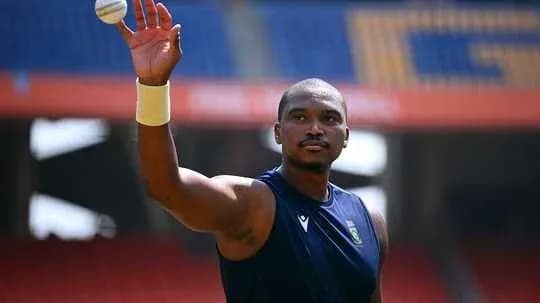
Lungi Ngidi has limped into a club no fast bowler wants to join, but South Africa’s dressing room knows all the members by name. Kagiso Rabada. Ottneil Baartman. Lutho Sipamla. Nandré Burger. Now Ngidi. Another quick, another breakdown, another hamstring gone.
Cricket South Africa confirmed on Friday that Ngidi has been ruled out of the ODI series against Australia, which starts at Kingsmead on Thursday. The diagnosis is depressingly familiar. Like Rabada, Baartman and Sipamla, he has a hamstring injury. Burger is the outlier, sidelined by a stubborn back problem that refuses to go away.
The pattern is too stark to ignore. Four frontline quicks, one body part.
So what’s going on?
A familiar injury at a predictable time
For Shuaib Manjra, CSA’s former chief medical officer and national men’s team doctor, the explanation is less mystery and more calendar.
“It’s not surprising, because if you look at any sport there are two peaks in hamstring injuries — the beginning of the season and the end of the season,” Manjra told Cricbuzz.
At the start, players come off breaks and are suddenly asked to sprint, jump and bowl at full tilt. The workload spikes, the muscles aren’t ready, and something gives. At the end, it’s the opposite problem: fatigue. Tired legs, tired backs, tired hamstrings. Same result.
“So it’s not surprising,” Manjra said. It sounds clinical. It also sounds like a warning that South Africa are living through in real time.
Ngidi’s latest setback came in Centurion last Friday, during the opening round of first-class matches. Turning out for the Titans against the Dolphins, he broke down just as the domestic season began to gather pace.
CSA have stopped short of guessing when he might return. The same goes for Rabada. Both have been ruled out of the ODIs, but there is no firm word on whether they will be ready for the Test series against Australia, starting in Durban on October 9.
Those Tests matter. A lot.
ODIs on hold, WTC front and centre
For a side defending the World Test Championship title — their only senior global crown — a random early-season ODI series is background noise. Beating Australia at Lord’s in June last year gave this group a clear identity. Protecting that title now shapes every selection, every rest, every risk.
That is why a five-second clip of Rabada bowling this week made waves. No match situation, no full run-up, just a gentle trundle off a few paces, shared on his social media accounts. Yet for South African fans, it flickered as a small but vital sign: the spearhead is at least moving again.
The challenge is not only getting these bowlers back on the park. It’s keeping them there.
Rabada hasn’t played any form of cricket since May. Burger last featured in June. Sipamla only returned to action last month after being out since July. Baartman, before last week, also hadn’t bowled in a match since July. These are not minor gaps. They are long layoffs that strip rhythm and match fitness.
For fast bowlers, the return is a careful climb, not a leap. Overs in the legs, as the old phrase goes. Build the load, build the trust in the body. But when the hamstring has already failed you once, that climb becomes a tightrope.
“The other risk for a hamstring injury is a previous injury,” Manjra said. “You’re more likely to pick up another injury if you go back too early.
“Doctors have a saying that the highest risk of an injury is a previous unrehabilitated injury. So we have to ensure that the player is fully rehabilitated, otherwise they are vulnerable.”
That is the line South Africa must walk with Rabada and company. Push too hard and you lose them again. Go too soft and they aren’t ready when Australia arrive.
Ngidi’s different path, same destination
Ngidi’s case is slightly different, and more complicated. Unlike some of his injured teammates, he has not been idle.
From August 27 to September 6, he played six ETPL matches for Glasgow Cosmic, sending down 120 of a possible 144 deliveries. That’s a solid workload, enough to suggest his body was being used, not left to rust, but not an outrageous burden for a seasoned international quick.
Yet, here he is. Another hamstring, another rehab schedule.
There is a counter-argument already doing the rounds: should he have been there at all? In a season stacked with eight Tests, should a key fast bowler have been plying his trade in franchise cricket instead of easing into the domestic and international calendar under closer national supervision?
It’s an easy question to ask from the outside. Harder when you’re the player staring at a short career and a finite earning window. Ngidi is a professional. Those ETPL overs come with a paycheque. Would his critics replace that income if he stayed home to “manage his workload”?
That tension — between national duty, personal livelihood and physical risk — is not going away. It will shape how South Africa handle every one of their quicks this season.
Patchwork attack for Australia ODIs
In the short term, the ODI series against Australia will go ahead without Ngidi, Rabada and Baartman, and without the injured Burger and Sipamla lurking in reserve.
Nqobani Mokoena has been drafted in to replace Ngidi. Gerald Coetzee comes in for Rabada. Duan Jansen covers Baartman. Sipamla and Burger were not in the original squad, but if fit they would have been breathing down the necks of those ahead of them. Instead, they remain on the outside, watching the queue reshuffle.
Marco Jansen will front the ODI attack, the tall left-armer suddenly the senior man in a group that also includes Corbin Bosch and teenage prodigy Kwena Maphaka. It’s an attack with promise, but also with a raw edge that Australia’s batters will test.
South Africa can live with that in September. What they cannot afford is the same picture in October, when Pat Cummins’ side walk out for the first Test in Durban and the World Test Championship defence truly begins.
By then, the question will be stark: will South Africa’s fast-bowling cartel be fit enough, and hardened enough, to keep hold of the mace they fought so hard to win?