Pakistan's Batting Collapse at Lord's: A Damning Verdict
Pakistan’s tour of England lurched deeper into trouble at Lord’s, where a fragile batting line-up folded for 110 and drew a withering verdict from Michael Vaughan that cut right to the bone of their Test credentials.
Collapse at the Home of Cricket
They came to Lord’s searching for a response. Beaten by an innings and 53 runs in the first Test, Pakistan had their captain back, a grand old stage beneath their feet, and a chance to reset the narrative.
Instead, the story barely changed.
Babar Azam’s return, billed as a stabilising presence, evaporated in eight uneasy runs. Around him, the top order crumbled: Abdullah Shafique for 5, Shan Masood for 1, Mohammad Rizwan for 7. Soft dismissals, hard consequences.
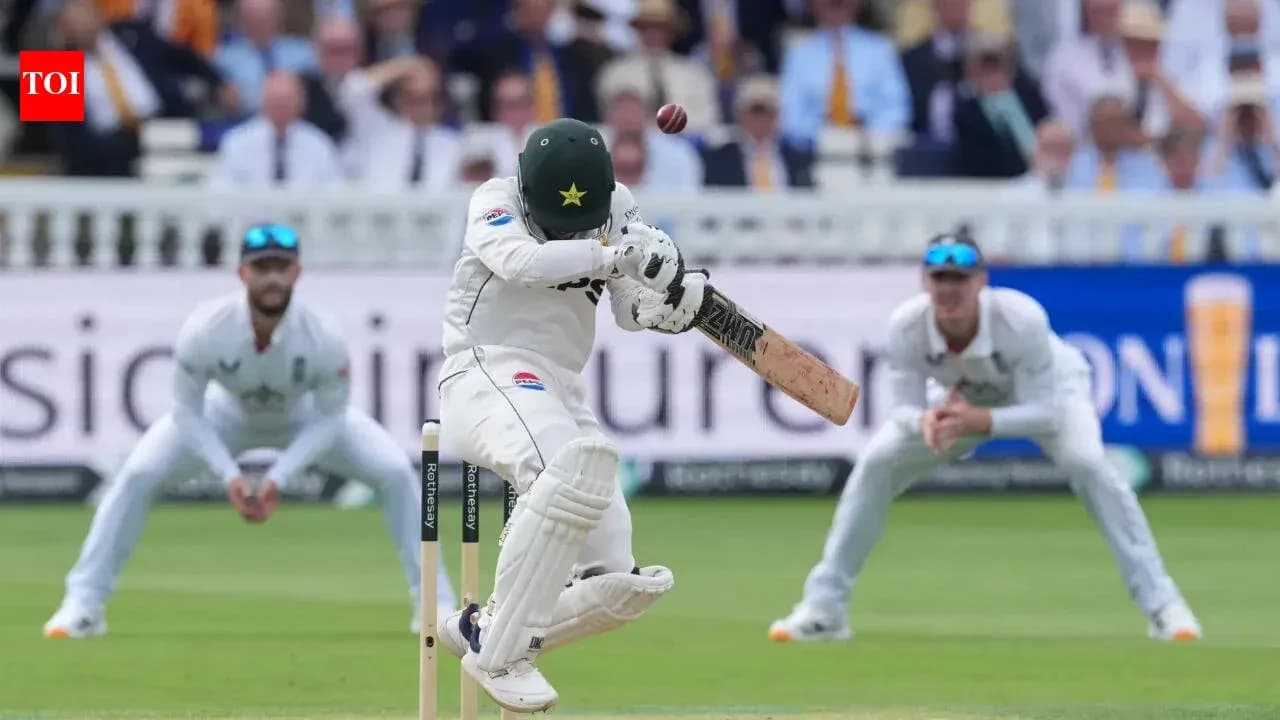
Only Azan Awais, opening the innings, showed any real resistance. He battled for 46, ducking bouncers and trying to stitch together something resembling an innings while wickets toppled at the other end. But once he fell, the tail offered little. Pakistan were all out inside 38 overs. Just 110 on the board. At Lord’s.
England’s bowlers barely needed a second invitation. They hit their lengths, found movement, and kept coming, safe in the knowledge that another chance was rarely far away.
Vaughan’s Brutal Verdict
Watching on, Michael Vaughan did not bother with diplomacy.
"I'll be brutally honest. The England bowlers aren't being challenged at all," he said on BBC Test Match Special, summing up the imbalance in stark terms. To him, this Pakistan batting order looked like a gift for a hungry attack.
"This Pakistan batting lineup is possibly the easiest batting lineup I've seen in a long time to bowl to," Vaughan continued. "And not only that, I think as a bowler, I think they're all queuing up to bowl because they know there are wickets out there."
It was an accusation of predictability, of a line-up that posed no real threat.
"You're not going to get hurt. There's no batter that's going to hurt them. No one's going to damage their figures, and it's really, 'roll up, roll up, who wants to get the wickets?'"
The criticism did not stop at mentality or form. Vaughan went further, questioning whether this Pakistan top order even belonged at this level.
"I think they all know that Pakistan aren't going to get big scores. So you're only going to be out there for 40 to 50 overs, so you give everything in every spell, you keep going to Joe Root saying, 'Err, I'll bowl another one.' There are so many wickets out there."
The picture he painted was damning: an international side reduced, in his eyes, to little more than target practice.
"It's so easy. They're still doing a good job, and they're still looking very threatening. And I think this bowling attack, the way they're bowling, will challenge better batting lineups if they continue in this fashion.
"But this is Pakistan batting. Is it second division county cricket? There's no way that they are batting in any standard to say that, that is a Test match batting lineup."
For a nation that has produced some of the game’s great stroke-makers and stylists, being likened to a second-division county side is about as harsh as it gets.
England Tighten the Grip
On the field, the numbers told the same story as Vaughan’s words.
Pakistan’s 110 left England with a stranglehold on the match. By stumps on the second day, the hosts were 81 for 3 in their second innings, already 261 runs ahead. The lead swelled, the pressure mounted, and Pakistan’s margin for error shrank to almost nothing.
The visitors were also hit by misfortune. Imam-ul-Haq, one of their more experienced openers, never made it to the crease in the first innings after suffering a calf strain while fielding. His absence only deepened the sense of vulnerability at the top.
Yet the scale of the collapse could not be pinned on injury alone. England sensed weakness and pounced. Spell after spell, they drove home the advantage, knowing Pakistan were unlikely to drag the game into the kind of long, grinding battle that can drain a bowling unit.
For England, this was dominance. For Pakistan, it was a mirror held up to a batting line-up that suddenly finds its very right to be called “Test standard” under public, and very pointed, scrutiny.
Now comes the hardest question for this Pakistan side: is this just a brutal phase in English conditions, or the sign of something far more structural and alarming in their red-ball batting?