Pakistan’s Batting Struggles Continue Amid Gill’s Dominance
By stumps at Edgbaston, Pakistan were not just behind England. They were chasing Shubman Gill.
Across three grim Tests in England, Pakistan’s entire batting unit now sits on 743 runs. Gill alone piled up 754 in India’s five-Test epic in England last year. One man outscoring an entire touring side. The statistic hangs over this series like a verdict.
On Wednesday in Birmingham, Pakistan inched closer to that unwanted landmark with another capitulation, bundled out for 133 on a surface that demanded discipline, not despair.
Turmoil off the field, chaos in the middle
This was supposed to be the reset. After bruising defeats at Headingley and Lord’s, the Pakistan Cricket Board ripped up the script. Seven players dropped. Coaching staff removed. A clear message sent: standards had slipped, and patience had snapped.
At the toss, Babar Azam tried to project calm.
“Not difficult,” he said when asked about leading through the upheaval. Changes, he argued, were a chance for new faces, an opportunity to respond. He promised Pakistan were trying to give their best.
Within a session, that optimism looked painfully hollow.
Put in to bat, Pakistan folded in familiar fashion. The names had changed; the pattern had not.
Robinson’s landmark, Pakistan’s freefall
Ollie Robinson set the tone. He trapped recalled opener Saim Ayub lbw for a duck to claim his 100th Test wicket, a milestone wrapped in a wicket that summed up Pakistan’s hesitancy. Static footwork, no conviction, pad before bat. England were on their way.
Jofra Archer then went to work on the new blood. Debutant Azan Awais departed, undone by pace and movement. Abdullah Shafique followed, Robinson striking again as Pakistan’s top order thinned alarmingly.
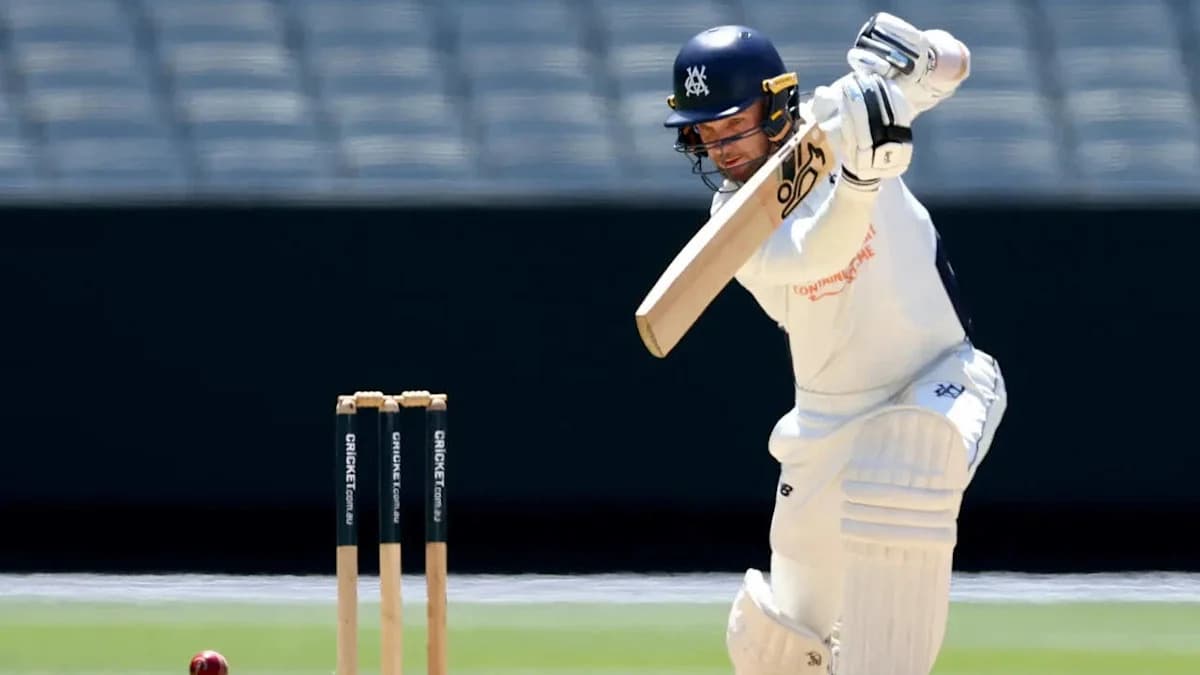
Shan Masood, the captain at Lord’s and now a senior batter in a reshaped side, perished to a poor cross-bat stroke, picked out at mid-wicket off Archer. It was the kind of dismissal that drives coaches to the edge: a risky shot, no real need, soft hands, easy catch.
Josh Tongue took over and ripped out the heart. He removed Babar Azam, then knocked over debutants Ghazi Ghori and Imran Randhawa before lunch. Pakistan lurched to the interval with their captain gone, their rookies exposed, and their innings already clinging to Saud Shakeel.
The afternoon brought only a brief pause in the slide. Razaullah Khan scratched 11 before falling, another wicket in a procession. Shakeel, once again, stood alone.
Shakeel resists, England close in
Shakeel had fought bravely at Lord’s, making 97 in a lost cause. Here, he tried to repeat the act. He left well, picked off anything overpitched, and showed a clarity of method that has deserted so many of his teammates.
He top-scored with 43, the only Pakistan batter to look remotely secure. Just as he threatened to drag the total into something competitive, Tongue produced the ball of the day, a sharp inswinger that snaked through his defence and clattered into the stumps. With that, Pakistan’s last real resistance vanished.
Archer finished with 3-25, all menace and hostility. Robinson’s 3-15 from 11 overs underlined his growing stature, while Tongue’s 4-42 rewarded his aggression and accuracy. England needed just 133 runs to move ahead in a series they already controlled.
They did not waste the invitation.
England tighten the screw
England’s reply was not flawless, but it did not need to be. Ben Duckett fell early for 11, nicking off to Mohammad Ali. Jordan Cox followed for four, undone by Mohammad Abbas. Pakistan’s seamers flickered briefly, but the pressure never stayed long enough.
Emilio Gay and Harry Brook took the game away with composed, assertive fifties. Where Pakistan had poked and prodded, England’s middle order trusted their strokes, punished width, and turned a tricky start into a position of command.
Joe Root’s strange run continued. He fell lbw yet again, the 10th time in 13 innings he has been trapped in front. Even that, though, barely dented England’s momentum.
By stumps, the hosts were 156-4, already 23 runs ahead. On a day when Pakistan’s batters had again misfired, England’s lead felt far larger than the scoreboard suggested.
Behind the numbers, Robinson added another layer to his own story. He moved from 99 to 102 Test wickets, his economy and control suffocating Pakistan. His bowling average now stands at 19.1, the best among post-war bowlers with more than 100 Test dismissals. While Pakistan search for stability, England have a seamer operating at rarefied levels.
A brutal comparison
The Gill statistic refuses to go away. Last year, across five Tests in England, Shubman Gill amassed 754 runs, the bedrock of India’s campaign. He batted with patience, hunger, and an unshakeable method.
Pakistan, across two full Tests and one innings of a third, sit on 743. An entire batting group, three matches deep into a marquee series, still trailing a single player’s haul from a different summer.
It is not just a quirky number. It is a damning illustration of the gulf between an in-form, world-class batter and a side that cannot string partnerships together. Individual consistency versus collective fragility.
The board has swung the axe. New faces have been blooded. The captain insists he is unfazed. Yet the same story keeps playing out: early wickets, soft dismissals, one or two defiant knocks, and a total that leaves the bowlers with no margin for error.
England, already ahead in the series and now in front at Edgbaston, can sense a clean sweep. Pakistan, 11 runs short of Gill and miles short of their own standards, must find answers quickly.
The question is no longer just how they save this Test. It is whether this batting group can rediscover its identity before an entire tour becomes a case study in how quickly a proud Test side can lose its way.