Pakistan Faces Reckoning in Edgbaston Amid Selection Chaos
Pakistan arrive in Birmingham not so much chasing a consolation win as staggering towards a reckoning.
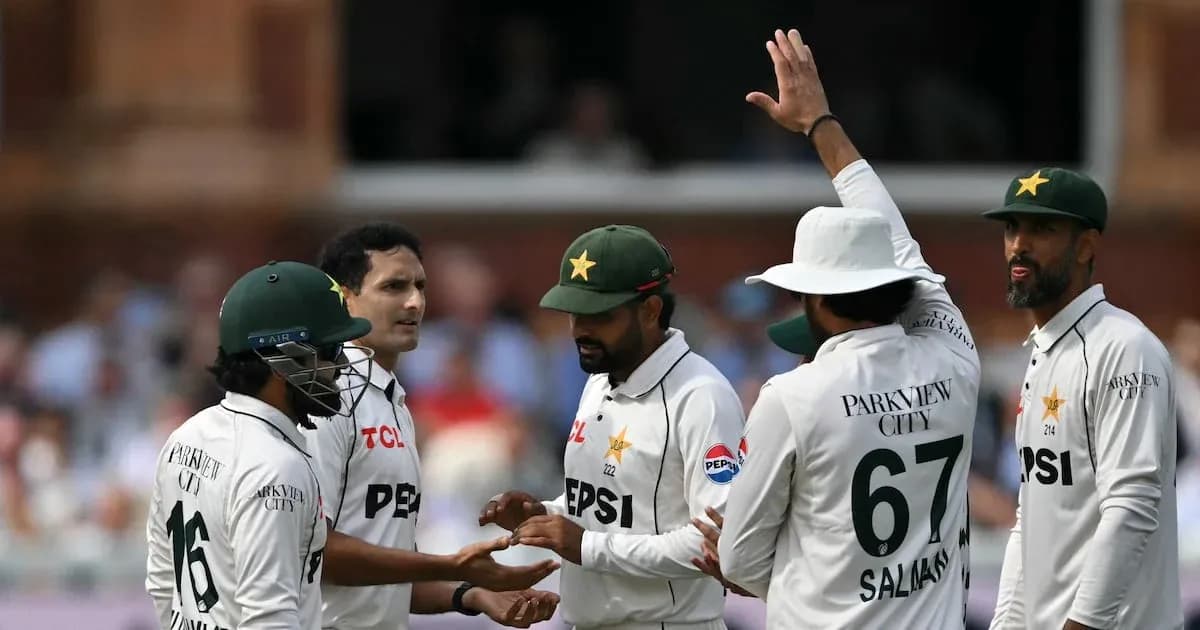
Two crushing defeats in Leeds and London have already handed England the series. An innings thrashing at Headingley, a 194-run beating at Lord’s. The margin has been brutal, the cricket often worse. What followed has been even more extraordinary.
Chaos as selection policy
In the days after Lord’s, the Pakistan Cricket Board detonated what remained of continuity. Seven players sent home. Seven replacements summoned. Five of them uncapped at Test level.
At the same time, the PCB sacked Test coach Sarfaraz Ahmed and bowling coach Umar Gul, parachuting in Pakistan’s white-ball duo Mike Hesson and Ashley Noffke to run the red-ball side at Edgbaston.
Salman Ali Agha, who captained at Headingley when Babar Azam was injured, gone. Ali Usman, the left-arm spinner who took a five-wicket haul in that same match, gone as well. So too Mohammad Rizwan, the seasoned wicketkeeper, and opener Imam-ul-Haq, who never even made it to the crease at Lord’s because of a calf injury.
It is upheaval on a scale that would shake any dressing room. For Pakistan, it almost feels familiar.
“The guys are probably more used to a little bit of chaos than I am,” Hesson admitted last week. “I don’t think anyone wants this to happen in the middle of a series.”
The former New Zealand head coach now has to turn that chaos into something resembling a balanced Test side. His aim is clear: restore the variety that once made Pakistan’s attacks feared.
“From my perspective, it is about putting a balanced squad together, not only for this Test, so we actually have some variety in our attack. Pakistan is known for the pace, unusual actions, mystery spin – we haven’t really been able to present any of that.”
He is right. The mystique has gone missing.
A proud past, a bleak present
The anger back home has not stopped at selection. It has gone higher, right into the PCB’s performance structure.
Azhar Ali, part of the Pakistan team that climbed to No.1 in the Test rankings a decade ago, laid the blame squarely at the feet of Aaqib Javed, the board’s high performance director since 2024. “Every decision he makes backfires, and he then says: ‘It’s not me’,” Azhar told the Guardian. Jason Gillespie, another former Pakistan coach, said Javed needed to “look at himself in the mirror”.
Those are not throwaway lines. They are public shots at the man tasked with setting standards.
On Monday, the PCB announced an investigation into the squad’s conduct in England. That might satisfy some critics in the short term. It will not change the fact that this is a side that has lost 15 of its last 20 Tests.
For all the old clichés about Pakistan’s “mercurial” nature, the recent trend is grimly consistent. Azhar captured it in one bleak phrase: “We’ve become totally consistent – in the most negative way.”
England smell a whitewash
While Pakistan turn inward, England move to Edgbaston with clarity and purpose. Series won. One more Test to underline the shift in their own red-ball direction.
At Lord’s, Joe Root spoke of a “perfect storm” for batting – seam-friendly pitches, heavy skies, responsive Dukes balls. It has not been easy for either top order, but only one team has repeatedly folded.
Pakistan have yet to reach 200 in any of their four innings. Each time, England’s retooled pace quartet has ripped through them. Ollie Robinson’s relentlessness, Jofra Archer’s hostility, Josh Tongue’s awkward angles, Gus Atkinson’s zip – together they have exposed a batting unit short on both technique and belief.
The contrast with the dying days of the Bazball era is striking. This England side are not chasing chaos; they are controlling it. Less swagger, more steel. Root, restored to the captaincy, has already banked a first Test series win in over a year. A 3–0 sweep would give his second stint in charge a ruthless full stop.
New faces, no time
For Pakistan’s incoming players, the task is unforgiving. No tour games between the second and third Tests, no gentle introduction to English conditions. They will walk straight into Edgbaston, into an England attack humming with confidence and a home crowd eager for a whitewash.
Hesson wants variety. He wants the old Pakistan trademarks back – the skiddy quick, the odd action, the spinner who makes batsmen second-guess every stride. On this tour, those hallmarks have been missing, replaced by a side that has looked ordinary, predictable, flat.
The fear among Pakistan supporters runs deeper than the scoreline in Birmingham. A win at Edgbaston, as unlikely as it looks, could be seized upon as vindication by those in charge, a convenient mask over structural failings and confused planning. Paper over the cracks once more, move on, wait for the next crisis.
Or this could be the moment when the chaos finally forces real change.
Either way, Pakistan walk out at Edgbaston carrying more than a lost series. They carry the question that now hangs over their entire Test future: is this just another bad tour, or the clearest sign yet that something fundamental has broken?