Pakistan’s Test Tour Amid Political Storm and Royal Audience
Pakistan’s Test tour of England, already carrying enough sporting intrigue of its own, has been thrust into the heart of a political storm – and now into the gardens of Clarence House.
From boycott threat to royal audience
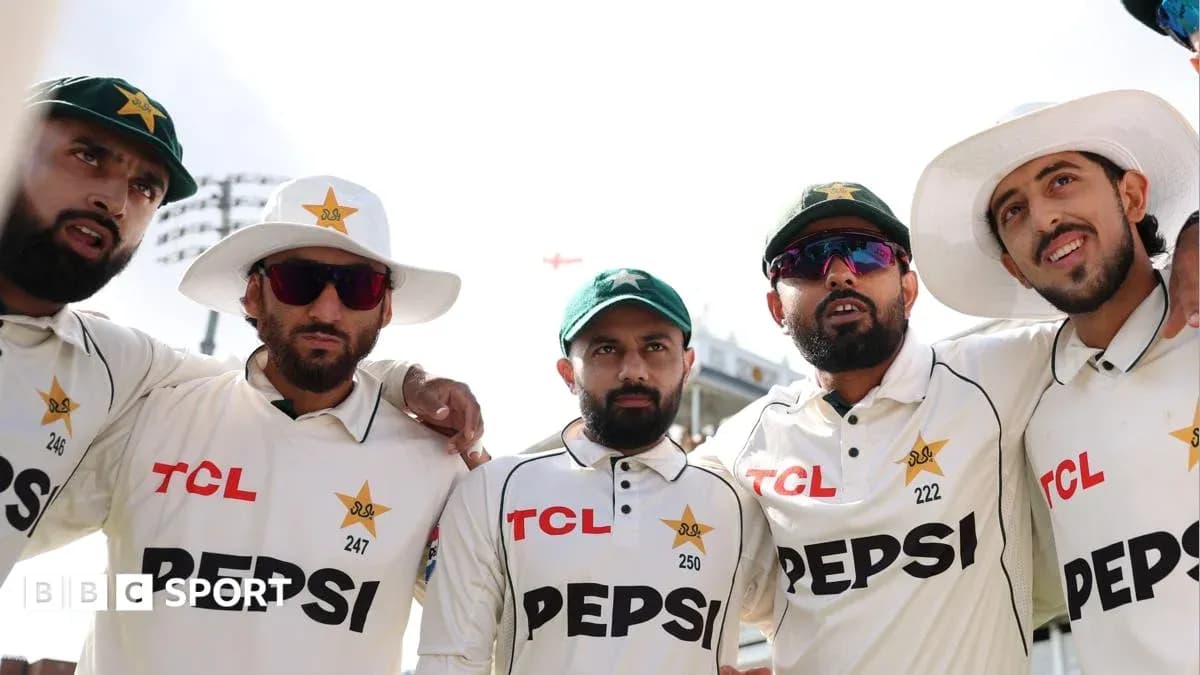
Later this week, King Charles is expected to meet the Pakistan Men’s Test team in London, an engagement Buckingham Palace says was arranged before a ball was bowled in this series. The audience, to be held in the gardens of Clarence House between the second and third Tests, is scheduled to last around 15 minutes.
The timing could hardly be more charged.
Only days ago, Pakistan’s tour briefly teetered on the brink. During lunch on day one of the second Test at Lord’s, Sky Sports planned to air an interview with Suleiman and Kasim Khan, sons of former Pakistan captain and prime minister Imran Khan, who has been in prison for three years on corruption charges he denies.
Before the interview went to air, the Pakistan Cricket Board (PCB) raised the possibility of not resuming the Test and even cancelling the remaining matches of the three-Test series. For a few uneasy moments, the Lord’s lunch interval felt like something far more consequential than a tactical reset.
The England and Wales Cricket Board, suddenly facing the prospect of a collapsed series, turned to the UK government for guidance, taking advice from the Foreign, Commonwealth and Development Office as the situation escalated.
The game, in the end, went on.
Imran’s shadow over the summer
Imran Khan’s presence in English cricketing life has always been strong; this summer, it feels inescapable. The 73-year-old, who carved out a 21-year international career and led Pakistan to their famous 1992 World Cup triumph at the MCG, now sits in jail back home, his political fall from grace playing out in parallel with a cricket tour in the country where he became a global star.
That dual identity – national hero and deposed prime minister – sits at the heart of the current tension.
In December last year, his sister Aleema Khanum publicly appealed to King Charles, in his role as Head of the Commonwealth, to speak out about her brother’s situation and the wider state of governance in Pakistan. Citing the Commonwealth Charter, she highlighted the principles of rule of law, democracy, and human rights, and questioned the silence of member states.
“Pakistan is a member of the Commonwealth of Nations,” she said, arguing that a member was “busy destroying” those core principles. Her pointed challenge – asking what purpose such organisations serve if they do not respond to “fascism or military dictatorship” – now hangs in the air as the King prepares to greet Pakistan’s players.
The Palace’s statement this week was far more measured. It confirmed only that, as Head of the Commonwealth, His Majesty will receive the Pakistan team between the second and third Tests. No political comment, no public intervention. Just an audience.
Broadcasters, backlash and a team caught in the crossfire
The immediate flashpoint came with Sky Sports’ decision to press ahead with the Imran sons’ interview. Despite receiving a complaint before broadcast, the network aired a version of Michael Atherton’s conversation with Suleiman and Kasim during the lunch interval at Lord’s.
The two brothers used the platform to voice concerns about their father’s treatment and security and to criticise the UK government’s response to the situation in Pakistan. It was emotional, direct, and unavoidably political – a far cry from the usual mid-session chat about seam movement and batting technique.
That was enough to trigger the PCB’s threat of drastic action. For a short while, a Test match at the home of cricket stood on the brink of abandonment because of an interview shown in the pavilion and on television screens around the ground.
Yet when the interval ended, Pakistan’s players walked back out. The second Test resumed on schedule. The series survived.
By the close of play on day two, Pakistan coach Sarfaraz Ahmed insisted he and his squad had been unaware of the interview when they took the field.
“I don’t know anything. I’m just focusing on the match,” he said when asked. Pressed again, he repeated: “You’re talking about the interview? We don’t know about the interview.”
His words underlined a familiar reality in modern international sport: teams often find themselves at the centre of political and diplomatic storms they did not create and cannot control, yet must somehow navigate while trying to win a cricket match.
Power, politics and the PCB
The political layers run deeper still. PCB chairman Mohsin Naqvi is not just a cricket administrator; he also serves as interior minister in Pakistan’s current government. The board has been asked to confirm whether Naqvi will attend the audience with King Charles, a detail that will be watched closely in Islamabad as much as in London.
The meeting itself is expected to be brief and ceremonial, a traditional nod from the Head of the Commonwealth to visiting cricketers. Yet the context ensures it will be read for subtext: who attends, what is said, and what is very carefully left unsaid.
Tours, tensions and what comes next
Away from the politics, the cricketing relationship between England and Pakistan has rarely been busier. In October, England are due to tour Pakistan again for a one-day tri-series involving the hosts and Sri Lanka. That trip will mark England’s fourth separate tour of Pakistan in four years, a remarkable turnaround after a 17-year absence driven by security concerns.
Those recent visits have rebuilt trust and re-established Pakistan as a major destination on the international circuit. They have also underscored how closely intertwined the two boards now are, commercially and competitively.
That is what made the threat to walk away from Lord’s so jarring. One interview, one lunchtime broadcast, and suddenly a flagship Test series was at risk.
Now the same tour moves from the Long Room to Clarence House, from a broadcaster’s studio to a royal garden. Players who grew up idolising Imran Khan as a cricketer will meet the monarch his sister once implored to intervene in Imran’s political fate.
The scorecards will record only runs and wickets. The story of this summer, though, is being written in far more complicated strokes.