Pat Cummins Addresses Sandpaper Scandal and Friendship with Usman Khawaja
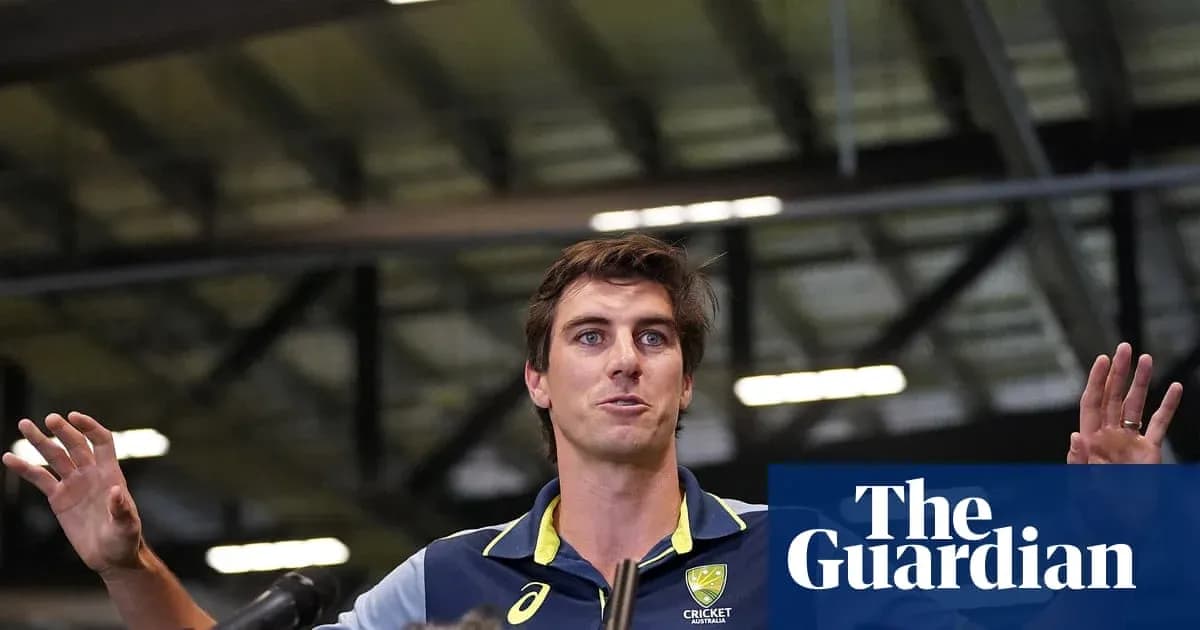
Pat Cummins walked into the room on Friday knowing exactly what waited for him. He stayed there for 70 minutes, taking every question, revisiting every angle of an eight-year-old scandal that refuses to die. If anyone suggested he needed to front up, he did more than that. He dug in.
This was not a captain hiding behind legalese or letting a media manager run interference. Cummins stood at the podium and went back over 2018, over sandpaper and suspicion, over what Usman Khawaja has now written in his book about a culture of cheating that, in his words, involved “all of us”.
On that, Cummins would not bend. Not an inch.
A friendship under strain
The easy story is Cummins v Khawaja. Teammates turned enemies. A dressing-room split. That’s the kind of narrative that writes itself and sells itself. It’s also not the whole truth.
Both men have stressed their friendship. Both know how much they’ve shared over more than a decade in the same colours. You can feel the strain now, but you can also see two thoughtful people trying, in their own ways, to live with a past that looks different depending on where you stood.
Khawaja’s criticism has always been broad-brush. He has never named anyone beyond the three sanctioned players from Cape Town in 2018. His charge is cultural, not individual: a team where everyone, in some way, was complicit. “It was all of us.” That line lit the fuse.
Cummins chose the opposite approach. No vagueness, no grey. He called Khawaja’s version “100% wrong” and “utter nonsense”, rejecting the idea of a coordinated, team-wide scheme and insisting it was a small group who “escalated a harebrained one”. The collateral damage, he argued, lands on those who had no part in it.
And then came the line that revealed how personal this has become.
“It’s something I’ve actually been grappling with the last couple of days – that Usman’s a friend, but I think the way he’s been quite casual and quite flippant with people’s lives, and Australian cricket, I don’t think that’s OK, and I don’t think that’s what friends do.”
You don’t say that if this is just a tidy disagreement over wording. You say that when you feel your integrity has been dragged into the mud with everyone else’s.
Inside the detail
What lifted Cummins’ appearance beyond a standard damage-control exercise was the detail. He didn’t just insist on his innocence; he walked through the mechanics of ball tampering and his own experience of it.
He listed the tricks players have used over the years to alter a ball. He said he’d heard of them, as every professional has, but never seen them used or agreed to them in Australian colours. The one time he had seen tampering in a professional match, he said, came in a Sheffield Shield game involving a bottle cap. Umpires picked it up. That’s how he found out.
He described how balls are shredded and abused in the nets with sandpaper and other tools, how that is a training exercise, a way to understand movement, not a template to be smuggled into a Test. He talked about team rooms that don’t function as a single, humming hive mind but as clusters and conversations, groups that form and break and never necessarily cross over.
He said he had spoken to others who shared his recollection: no memory of Khawaja calling for collective responsibility in the rooms, no recollection of anyone shutting such an idea down. If that discussion happened, it didn’t reach him.
There was one overlap between their stories. Khawaja wrote that during the 2017-18 Ashes, players lifted the quarter seam of the ball to gain movement. Cummins said that in his first home series he had at times noticed a raised seam and assumed it was a natural imperfection. Only later, with experience, did he reconsider what he’d seen.
That admission will be seized on by those who believe every bowler must know every nuance of their ball. To them, the idea that a fast bowler could miss deliberate tampering is nonsense. On paper, that logic is compelling.
Real life is messier.
Batters handle the ball between deliveries, tossing it along familiar arcs from keeper to slip to cover to mid-off before it comes back to the bowler. Batters dominate strategy meetings. Batters, historically, captain the side. Cummins is the first specialist bowler to lead Australia. The old assumptions don’t quite fit this new reality.
Could he be lying? Of course. If he is, he delivered a polished performance. But liars usually give a little ground, create wriggle room. Cummins chose the opposite. He held his line to the millimetre.
No easy villains
The hunger for a simple villain in this saga is endless. One name, one face, one culprit to carry the weight. This latest chapter refuses to give it.
Khawaja has no obvious reason to fabricate. What he does have is loyalty – particularly to David Warner, a lifelong friend and the lightning rod of the original scandal. That loyalty might colour how he sees the past. His framing also carries its own contradictions, exposed by his own words.
In the same chapter where he condemns a culture of cheating, Khawaja admits his anger at not being handed the captaincy when Steve Smith was stripped of it. Smith lost the job for allowing sandpaper into the equation. By Khawaja’s own account, he had known what was going on, sat next to Cameron Bancroft, and told him to be careful. The question lingers: why would he have been a more suitable leader under those circumstances?
Cummins did not ignore that tension. “It’s a revelation to me that he knew what was going on, that he was sitting next to Cam, and that he told Cam to be careful. So maybe he’s been grappling with that for eight years.”
That line cuts both ways. It offers an explanation for Khawaja’s broader guilt and his insistence that “it was all of us”, but it also sharpens the focus on who knew what, and when.
The captain, the teammate, the gesture
Strip away the accusations and counter-accusations, and one moment from Khawaja’s book still stands out – and it has nothing to do with sandpaper.
He wrote about the time Cummins noticed the post-series champagne celebrations and understood what it meant for his Muslim teammate. Khawaja doesn’t drink. Being doused in alcohol after a win made him feel like an outsider. Cummins changed it. He adjusted the celebrations. A small act, on the surface. A profound one for the person on the receiving end.
“It was that one little gesture from Pat that changed it all and showed the world we are for everyone. I already liked Pat, but I loved him after this.”
On Friday, Cummins looked genuinely hurt when that passage came up. “Uzzy’s said to me a few times how much he’s enjoyed being part of the team. That means more to me than any win.” That is not the language of a cold feud. It’s the sound of a friendship that has hit something jagged and real.
Where it all lands
So where are we, after all the words?
We have a group of players who, at the time, were obsessed with reverse swing and how to find it. We have others who say they stayed out of those conversations. We have assumptions, on both sides, that everyone else must have been thinking what they were thinking. And we have the shock that comes when you realise they weren’t.
The camps are now clearer. One insists on a culture-wide failing. The other insists on a small group going rogue. The truth, as ever, probably lives in the uncomfortable space between.
What has changed is not the past but the silence around it. For nearly a decade, those at the centre of Cape Town have mostly hidden behind statements, legal advice and carefully polished lines. On Friday, Pat Cummins chose something different: detail, exposure, and the risk that comes with both.
The cricket will move on. It always does. The question now is whether the people at the heart of this story – teammates, friends, leaders – can do the same, and what kind of Australian team emerges from the scars they’ve finally stopped hiding.