Pat Cummins Faces Sandpaper Controversy Again
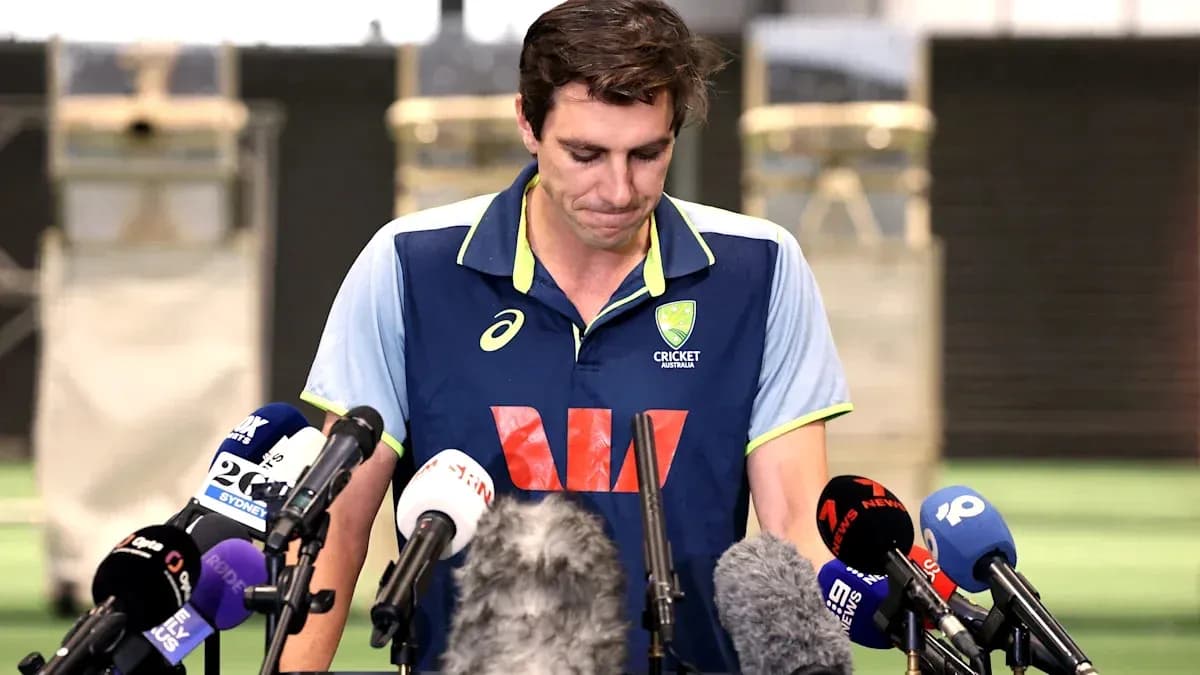
Inside the indoor nets at Cricket Central, Pat Cummins stood under the lights and in front of more than a dozen TV cameras, trying to do what no Australian cricketer has managed in eight years.
Outside, New South Wales and South Australia were easing into a crucial Sheffield Shield clash, the muffled cheers from the crowd occasionally slipping through the walls. Inside, Australia’s Test captain was being asked, again and again, about sandpaper, Cape Town, and who knew what in 2018.
He made his intention clear early.
“I don’t want to talk about this again after today,” he said. “Even if it takes all day... I’ll stay here until we have no more questions.”
It almost did take all day.
Khawaja’s book, old wounds
The storm has been whipped up by a memoir from Cummins’ friend and former teammate Usman Khawaja, released last week. In it, Khawaja revisits the infamous third Test against South Africa in Cape Town, when Cameron Bancroft was caught with sandpaper and three players were banned.
The official line at the time was simple: Bancroft, David Warner and Steve Smith were involved. They paid the price.
Khawaja’s version is far more explosive. He writes that the entire Australian team knew about the sandpaper plot and says he urged the side to take collective responsibility once Bancroft was caught.
“I said: ‘Take this as a team. We did this as a team. We knew what was going on, and we have to take it as a team’.”
Those sentences have detonated like a delayed grenade inside Australian cricket. They have dragged Cummins, now the captain and the face of the national side, into a scandal he has long insisted he knew nothing about.
Khawaja, retired from international cricket since January, has since tried to step back from the fire he lit. He says he doesn’t want a “witch hunt” and refuses to spell out exactly who he believes knew, or how much.
But the damage is done.
Fans caught between fatigue and fury
At the ground outside, where the only sand in sight was on the practice pitches, spectators were split between disbelief and exhaustion.
Josh, 28, told the BBC he thought this saga had finally been buried.
“It’s just a bit crazy that it’s all blown up again... I think it is a bit ridiculous, after eight years.”
Another fan watching the Shield match was more blunt: “I’m a bit bored of it.”
There is irritation that Khawaja has chosen this moment – on the cusp of a promising summer and a big year of cricket – to reopen the darkest chapter in the modern game. Yet there’s also the nagging sense that, for someone in his position, there was never going to be a “good” time to tell it.
Among younger supporters, there’s also a familiar refrain: why is Australia still copping it?
“It’s a bit of a stitch up,” said 21-year-old James. “Every country has done it... if it wasn’t us, it was probably going to be someone else.”
That belief – that ball tampering was widespread and quietly tolerated across eras and nations – only sharpens the feeling of injustice that Australia, and particularly this group of players, cannot outrun Cape Town.
A nation of ‘good sports’ under the microscope
For many, the sting goes deeper than a single Test or even a single team.
Prof David Rowe of the University of Western Sydney told the BBC the scandal cut across how Australia sees itself.
“The idea of being a good sport is two things. One is being good at sport, so you actually win. But the other side is that you do it honourably and fairly,” he said.
“Many Australians would see themselves as above all that. That is: cheating is what other teams get up to... not the nation of good sports.”
The revelation that Australia’s Test side had crossed that line was, in his words, a “nasty shock” that brought “collective shame” – a shame that has not fully lifted.
Rowe believes the game cannot truly move on without a fresh, credible response from Cricket Australia.
“One of the best ways to fuel conspiracy theories and keep sandpapergate going is to essentially say ‘there’s no more to see here’ – especially when that comes from the authorities,” he said.
Yet that is exactly the stance the governing body has taken. Chief executive Todd Greenberg has already ruled out reopening the investigation, even as pressure builds from sections of the public and the game’s old guard.
Old teammates, new fractures
Inside the sport, Khawaja’s book has landed like a bouncer in a dressing room that thought the over was done.
David Warner, the player hit hardest by the original sanctions, has backed Khawaja’s account, saying he has “written the truth” and accusing Cummins’ press conference of throwing him “under the bus”.
Steve Smith, the captain in Cape Town and another of the banned trio, has been overseas and remains publicly silent. Bancroft, who previously hinted that the bowlers knew more than they let on, is also saying nothing for now.
Around them, the commentary has become a chorus. Former captains, ex-coaches, members of what Australians like to call their “cricket royalty” – many with their own reputations tangled in that era – have all weighed in.
The result is a fractured narrative with two hardening camps: those who say the truth is finally being told, and those who insist they are being smeared by vague accusations and selective memory.
Cummins on the line
Into that mess walked Cummins.
Over what one reporter suggested might be the longest press conference in Australian sporting history, the captain tried to hold the line. He paused often, weighing each word, clearly aware that every phrase would be forensically examined.
He did not lash out. But he did not sugarcoat his frustration either.
He rejected Khawaja’s claims as “vague” and made it clear he was hurt that a close friend had dragged him into the crossfire.
“Friends aren’t casual with each other’s lives and reputations... That’s something I’ve been grappling with the last couple of days,” he said.
Asked about calls for a new investigation, Cummins pushed the decision back where it officially belongs: to Cricket Australia. It was, he said, a matter for the governing body.
What he did own, unmistakably, was his annoyance that sandpapergate still shadows everything this team does.
He gestured towards the Shield match outside and pointed to Friday’s one-day international against England in Perth, a marquee fixture from which he and other key players are being rested.
“It’s been eight years... Hopefully today we put a line through it and we’re done and we can all move on to much more fun topics, like actual cricket.”
Hope, though, is not the same as control.
A scandal that refuses to die
As the questions finally dried up and the cameras began to power down, there was no sense that anything had been settled. If anything, the lines are now more sharply drawn.
On one side, a captain adamant he will not wear responsibility for something he says he did not know about. On the other, a former teammate insisting the team knew and should have shared the blame.
In the stands, fans like James can see what’s coming.
“It’s going to be hard to move on, given that there’s two sides of the story and it doesn’t look like either side is going to back down,” he said. “I don’t know what the outcome will be.”
Eight years on from Cape Town, Australian cricket is still waiting for an ending everyone can live with. The question now is whether that will come from a governing body that says there is “no more to see”, or from a dressing room that may yet decide it has more to say.