Peter Handscomb's Unbeaten 131 Leads Victoria Against Western Australia
Peter Handscomb has spent much of this young summer shadow-boxing with his own form. On Wednesday at the MCG, he finally landed clean.
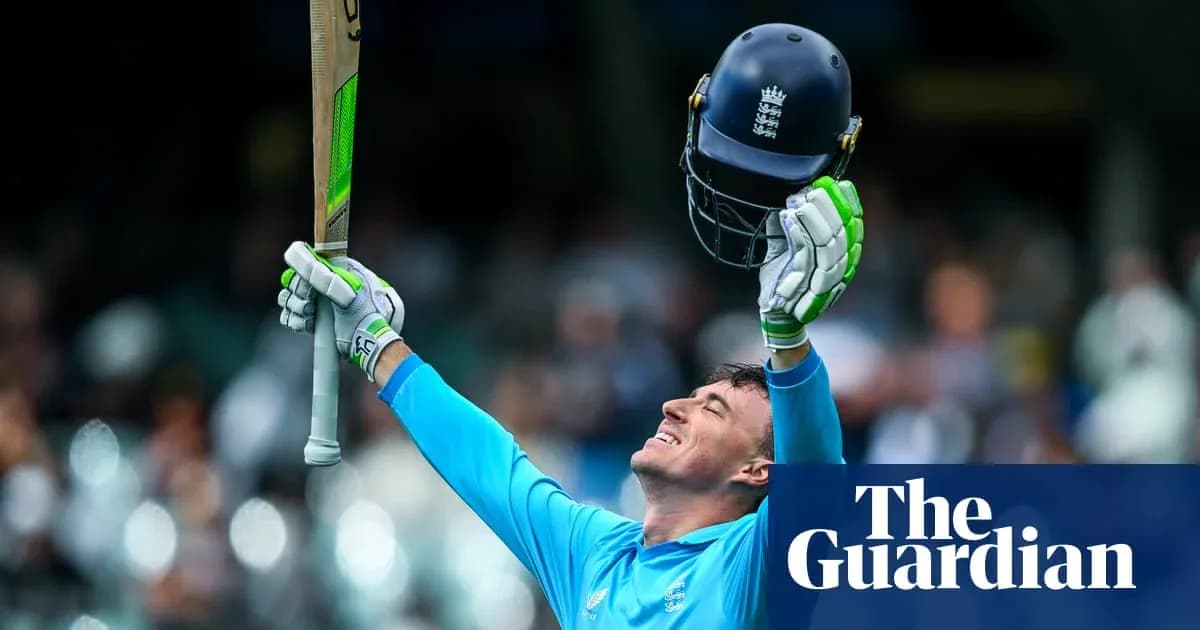
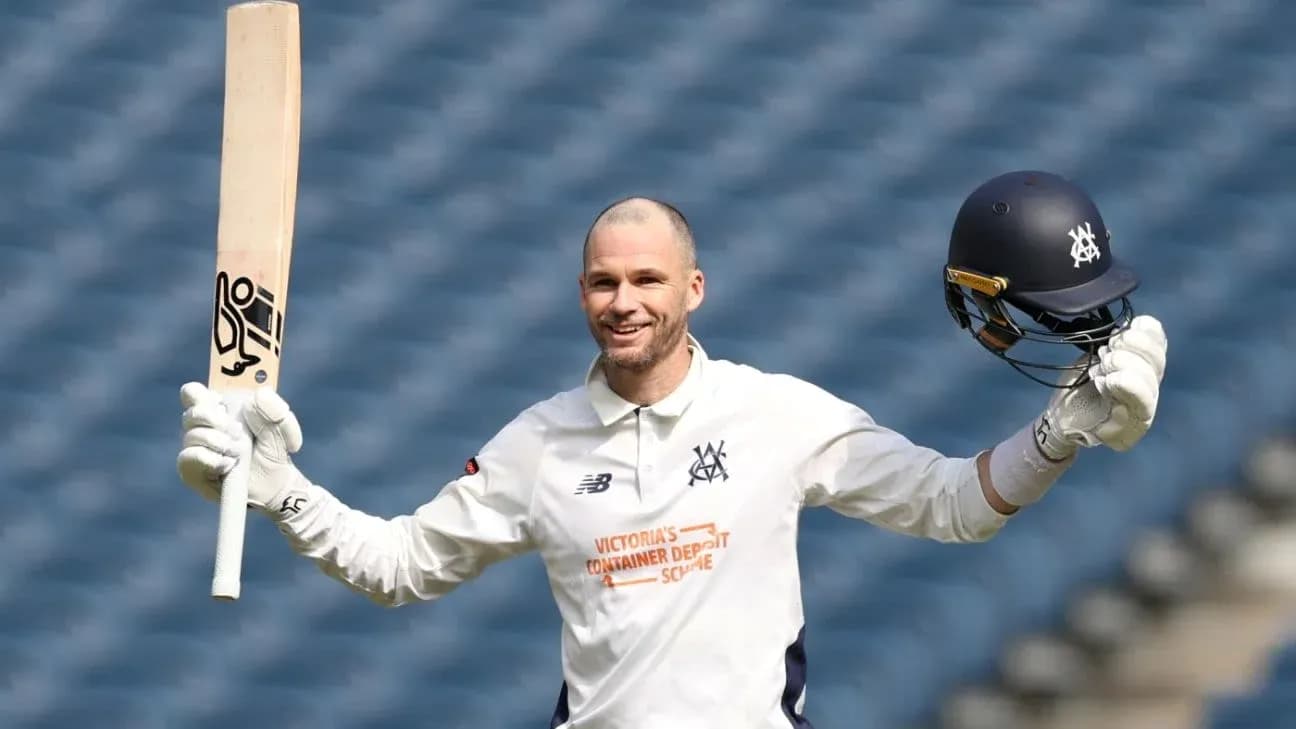
On a surface as benign as the old ground has served up in years, the Victoria captain peeled off a commanding, unbeaten 131 to haul his side to 292 for 3 against Western Australia and, just as importantly, shove his name back under the noses of Australia's Test selectors ahead of January’s tour of India.
Handscomb’s answer to the selectors
This was not a scratchy, survivalist hundred. Handscomb batted like a man who knew this was his day and refused to waste it.
Walking in at 44 for 2 after Victoria chose to bat on a straw-coloured pitch stripped of almost all live grass, he immediately looked a class above. The early signs were there: a crisp straight drive that split mid-on and mid-off, a still head, decisive feet. On a true surface offering consistent bounce and only modest sideways movement, he cashed in.
The context mattered. Handscomb arrived at this game with a string of starts and no statement. A luckless Australia A tour of India in September, three frustrating Shield outings, plenty of time spent wondering how good touch could coexist with thin returns. After play he admitted as much, describing the mental grind of “feeling good” but not making runs, and the decision to strip his game back to a couple of key basics to clear his head.
The response was emphatic. He finished the day 131 not out, having barely offered Western Australia a genuine chance.
MCG pitch under the microscope
All of it unfolded on a surface that will be talked about almost as much as the runs scored on it.
Curator Matt Page, in his first Shield match at the MCG since last summer’s infamous two-day Ashes Test, went the other way this time. Most of the live grass was shaved off, leaving about 7mm for the opening game of the season. With the Melbourne Cricket Club installing ball-tracking cameras to monitor bounce, seam and spin in the lead-up to the 2026 Boxing Day Test and the 150th Anniversary Test next March, nobody at the ground wanted another pitch-induced fiasco.
The result: a deck that played as flat as it looked. There was decent carry and a hint of movement with the new ball in the morning, but very little for the spinners and no demons. Handscomb, of all people, was never going to complain.
Early wobble, then control
Western Australia did have a sniff early.
Marcus Harris nicked four times in a frenetic 20-ball 15. Twice the ball flew wide of the cordon, once he was put down at first slip, and finally Joel Curtis clung on behind the stumps. Before that, Sam Harper had already gone, falling to a superb diving catch from Albert Esterhuysen at wide fine leg off Kieran Elliott.
At 44 for 2, Victoria’s decision to bat first on a bare-looking pitch sat on a knife-edge. Handscomb and Ashley Chandrasinghe steadied it.
The pair had to graft through a sluggish outfield that turned well-timed strokes into singles and twos. Chandrasinghe, a late inclusion after Campbell Kellaway withdrew on the eve of the match with back spasms, dug in. Handscomb, though, dictated. His judgment outside off stump was sharp, his defence compact, his scoring shots clean.
After lunch, Western Australia tried to rattle him. Liam Haskett and Elliott went short, peppering him with bouncers. Handscomb rode it with ease, rolling his wrists, swaying out of the line, and when they overpitched or erred straight, he hammered Elliott through midwicket to underline who held the upper hand.
Spin test passed, again
The real audition came when spin arrived.
Corey Rocchiccioli, in Australia A colours not long ago, and former Test left-armer Ashton Agar were supposed to probe any lingering weaknesses. Handscomb instead reminded everyone why he has long been tagged as one of the country’s best players of slow bowling.
He advanced down the pitch to Rocchiccioli, once lofting with the spin, another time bravely going against it. He rocked back deep in the crease to punch through the off side, and threaded in a series of well-controlled sweeps. Nothing reckless, everything calculated.
Chandrasinghe, by contrast, had to fight for his 53. He occupied the crease, nudged, nurdled, and slowly built a 112-run stand with his captain. Just as he looked set to push on, he blinked. A rush of blood to accelerate the scoring saw him slog-sweep Rocchiccioli against the turn, only to sky a simple catch to mid-on.
It was a rare misjudgment on a day Victoria otherwise bossed.
Macdonald piles on familiar pain
Blake Macdonald picked up where Chandrasinghe left off and where he himself had left Western Australia last summer.
Back then, he had punished them at the MCG with scores of 79 and 109 not out. The memories came flooding back as he again settled in with assured footwork and sharp placement against the spinners, effectively mirroring Handscomb’s method.
He moved smoothly to a half-century, rarely rushed, rarely troubled. His one major slice of fortune came against Agar, when a ball that gripped and turned a fraction more than expected took the thick outside edge and just brushed the ends of Curtis’ gloves rather than nestling in them.
By then, Western Australia had seen enough. Handscomb and Macdonald stitched together a second consecutive century stand for the innings, pushing Victoria from solid to dominant.
Second new ball bites back
Just when the game threatened to drift, the second new ball jolted it awake.
With the harder Kookaburra in hand late in the day, Western Australia finally dragged something more venomous out of the pitch. Macdonald edged one over the slips, the ball leaping higher and quicker than anything seen since morning. Handscomb, so composed for so long, suddenly played and missed three times at Elliott.
One delivery in particular underlined there was still life in the surface: it jagged sharply past Handscomb’s inside edge, kissed the air above off stump and carried through to Curtis. On another day, another inch, and the story might have shifted.
It didn’t. Handscomb survived, Victoria closed at 292 for 3, and the scorecard at stumps told a simple tale: a captain’s day out on a pitch designed not to misbehave.
For Victoria, it’s a platform to drive home a first-innings stranglehold. For Handscomb, it is something else again – a timely, emphatic reminder that when Australia go searching for players who can stand up to India’s spinners in January, his name still belongs near the top of the list.