Rashid Khan's Journey: From Underdogs to Afghan Cricket Contenders
Rashid Khan has lived every chapter of the India–Afghanistan story. From the days when Afghanistan turned up hoping to compete, to now, when they arrive expecting to win. The rivalry has grown. So has his gaze. It’s sharper, more demanding, especially of his own team.
On the eve of the third and final ODI against India, Rashid cut through the noise. For him, this series has been less about scorelines and more about hard truths.
Powerplays and a mentality shift
Afghanistan’s rise has been built on heart, spin and stubbornness. Rashid knows that’s no longer enough.
“The learning is about how we are going to use the powerplay as a batting unit,” he said, pointing straight at the phase that has repeatedly hurt Afghanistan. They watch India pile on runs in those first six overs. They see the template. They just haven’t matched it yet.
He wants his batters to think big — not in theory, in numbers. Delhi’s flat decks and high-scoring games demand a mindset that 300 is a par score, not a dream. That means top-order batters who don’t stop at 40 or 50, and a group that believes it can “score big runs under any condition, in any situation, and against any bowler.”
The flip side is just as stark. With the ball, Afghanistan have bled far too much, far too early.
“If you are giving more than 70-80 runs in the powerplay, it doesn't matter if you are defending 200 or 230,” Rashid admitted. That’s the reality. You can’t spin your way back into every game if the new ball has already blown a hole in the plan.
He doesn’t dress it up. The batting department still needs “a lot of hard work.” The bowling group must “find solutions” with the new ball. The takeaway from this India tour is not romantic; it’s practical. Identify the damage zone and fix it.
A dangerous new India
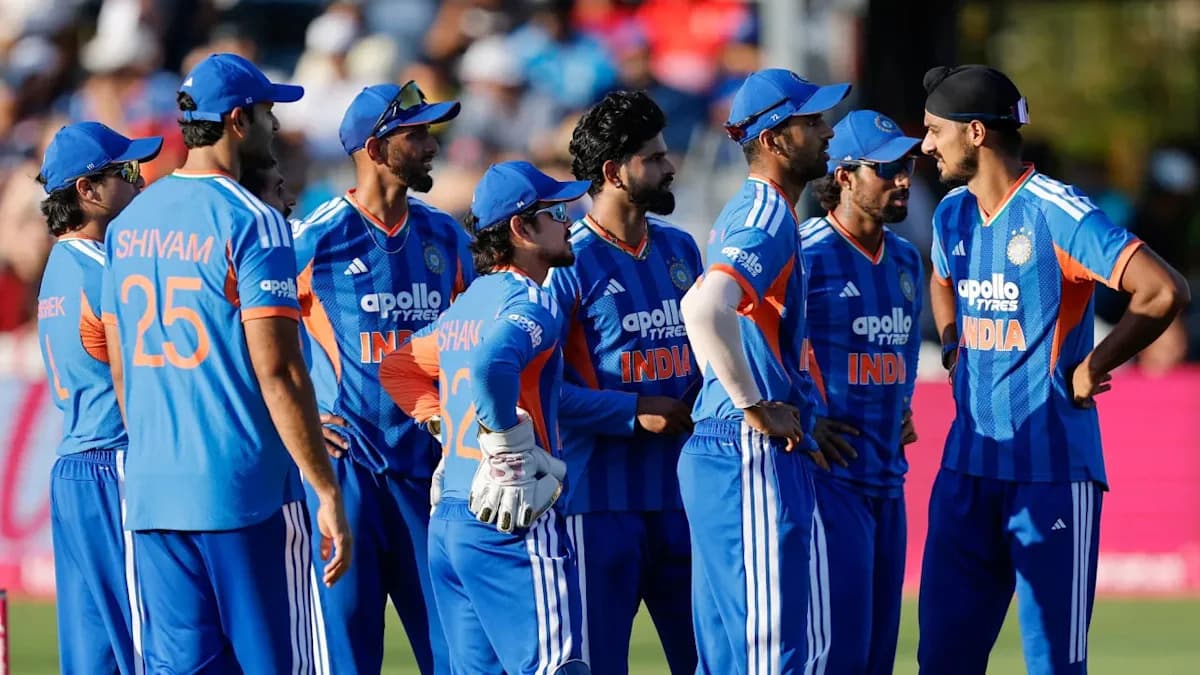
Rashid has seen multiple versions of India’s T20 side. The current Shreyas Iyer-led group, stacked with fearless young hitters, leaves a mark.
“It is a very dangerous side, a destructive side,” he said. The threat doesn’t end with the openers. It comes in waves. One after another, batters walk in with the same intent: go big, go deep.
What stands out to Rashid is not just the strike-rate. It’s the conversion. These are players with T20 hundreds, not just flashy cameos.
“They play fearless cricket,” he noted, and in his view, that is exactly how the format should be played. The skill level, the depth of batting, the refusal to settle for 20s and 30s — that, to him, is what separates this Indian side from most others.
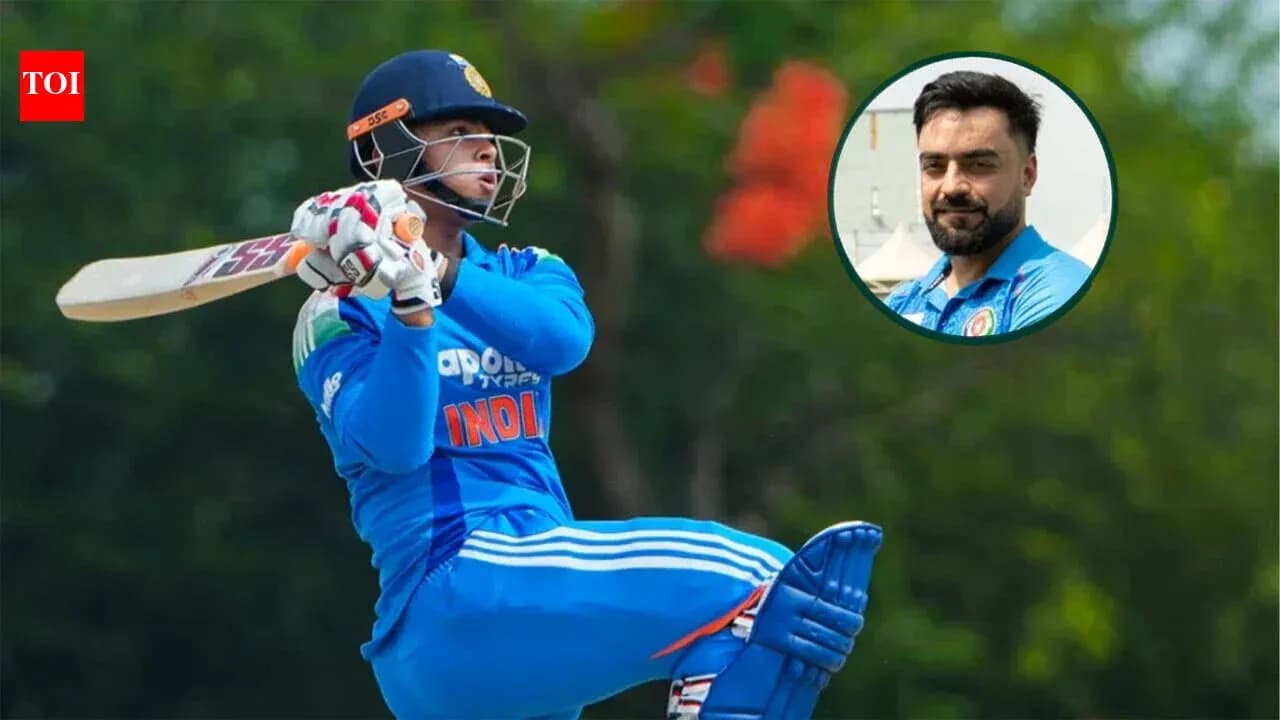
Abhishek Sharma: India’s “big package”
Among the new faces, one name lights up Rashid’s voice — Abhishek Sharma.
The two spent time together at Sunrisers Hyderabad, and Rashid saw early what India is now beginning to understand.
He talks of Abhishek not just as a free-flowing left-hander but as a genuine all-round option. “He is doing so well with the bat,” Rashid said, before quickly adding that Abhishek is “a very good bowler as well” who can operate in the middle overs.
In Rashid’s eyes, that dual skill-set makes Abhishek “a very big package for Team India in the future.” It’s the kind of endorsement that comes from someone who has shared a dressing room, not just watched from afar.
The phenomenon of Vaibhav Sooryavanshi
If Abhishek is the polished product in the making, Vaibhav Sooryavanshi is the raw, startling phenomenon.
Rashid has bowled to him. He’s seen the 15-year-old already step into international cricket. The word he keeps circling back to is “fearless.”
This isn’t empty praise. Rashid drills down into what makes Vaibhav different. Shot selection. Clarity of game plan. The ability to know exactly which options to take against any bowler, any attack, any situation — at an age when most players are still just trying to survive.
“You hardly see those kinds of things at a very young age; it comes with time, but he already has it,” Rashid said. That’s the part that startles him.
Then there’s the power. The hand-eye coordination. The way Vaibhav hits the ball, the way he backs his strokes. Rashid calls him “a god-gifted talent” and doesn’t hide his admiration.
Asked if the teenager reminds him of a young Rashid Khan, he laughs at the comparison. “I wasn't that talented, to be honest, at that age,” he admitted. The skill was there, yes, but not the ability to hit those towering sixes that Vaibhav is already producing in the IPL and now for India.
For Rashid, that’s the key. Vaibhav has not just announced himself in franchise cricket; he has carried that same fearlessness into the national side. That, he says, makes the youngster “very special.”
From underdogs to contenders
Afghanistan’s transformation has not been overnight. It has been built on landmark results, each one chipping away at the old narrative.
Rashid traces the turning point to the 2023 ODI World Cup in India. Beating England there, after a bilateral T20 series win over Pakistan, lit the fuse. Victories over Sri Lanka and Pakistan at the World Cup followed. Then came the T20 World Cup 2024 run in Australia and New Zealand, where Afghanistan surged into the semi-finals.
That sequence did something more important than change rankings. It changed belief.
“We are in that category where we can beat big teams,” Rashid said. The world now expects Afghanistan to compete. The players expect to win.
The challenge, as he sees it, is no longer about proving they belong. It’s about sustaining this level. “It’s about us now, how we are going to manage and how we keep this continuing,” he added. Consistency is the next frontier.
Ibrahim Zadran and the next leadership chapter
Rashid has captained Afghanistan through pressure, expectation and transition. Now, Ibrahim Zadran leads the T20I side, and Rashid likes what he sees.
What stands out for him is Ibrahim’s work ethic and his desire to lead from the front. In a young dressing room, that matters.
“You need someone like that who is very consistent and who is very straightforward,” Rashid said. Ibrahim, in his view, is exactly that — honest, hard-working, and intent on setting standards for the younger players.
Rashid’s support is there, but it is deliberately measured. He has learned, the hard way, what captaincy can do to a player’s mind.
Sometimes, he admits, he took too much on himself. A captain who tries to carry everything, every result, every mistake, ends up playing with a weight that crushes his own game.
Those are the lessons he passes on now: calm down, trust your skills, focus on process, not outcome. “As long as you have process in the mind, I think everything will be fine,” he said. It sounds simple. In the heat of competition, it rarely is.
The next Afghan wave
Rashid’s influence goes beyond his own overs. He is now the reference point for a new Afghan generation.
He doesn’t hesitate when asked about the next names to watch. Noor Ahmad has already shown his quality and, in Rashid’s eyes, can “get to the next level” and deliver big performances in the years to come.
Fast bowling remains an area Afghanistan must strengthen, but there too, Rashid sees hope. He points to Abdollah Ahmadzai, already in the squad and bowling with serious pace. Manage him properly, Rashid insists, and Afghanistan could have a genuinely quick, long-term spearhead.
A body rebuilt, a career recalibrated
Rashid’s own journey has shifted from relentless globetrotter to calculated survivor.
As a teenager and through his early 20s, he played everywhere. League to league, country to country, format to format. It gave him invaluable experience — a crash course in conditions, batters, pressures.
Then came surgery. Suddenly, the body that had carried that insane workload pushed back.
He cut down on cricket. He went to the Red Bull Athletic Performance Centre in Austria, where a battery of tests gave him, as he put it, “a very clear image and idea” of his body. What to avoid. Where to improve. How much he can play, and where.
He now moves with a plan, not just a diary full of contracts. The ambition remains the same, but the route has changed.
One unfinished line in the story
For all the leagues, for all the nights under lights, Rashid Khan still sees one blank space in his career.
“The one unfinished thing is to win the World Cup for team Afghanistan,” he said. Not a personal milestone. Not another contract. An ICC trophy.
The 2024 T20 World Cup semi-final run teased that dream. Afghanistan stood within touching distance of a final, only to fall short. The hurt lingers. So does the hunger.
Rashid wants, before he is done, to be able to say: yes, we did it at an ICC event — T20 World Cup or 50-over World Cup, it doesn’t matter. The format is secondary. The trophy is everything.
For a player who helped drag Afghanistan from obscurity to the world stage, the question now is stark: can this generation, with its fearless kids, its new leaders, and its sharpened belief, finish the story he has spent a career starting?