Ravichandran Ashwin's Take on Rishabh Pant's Test Career
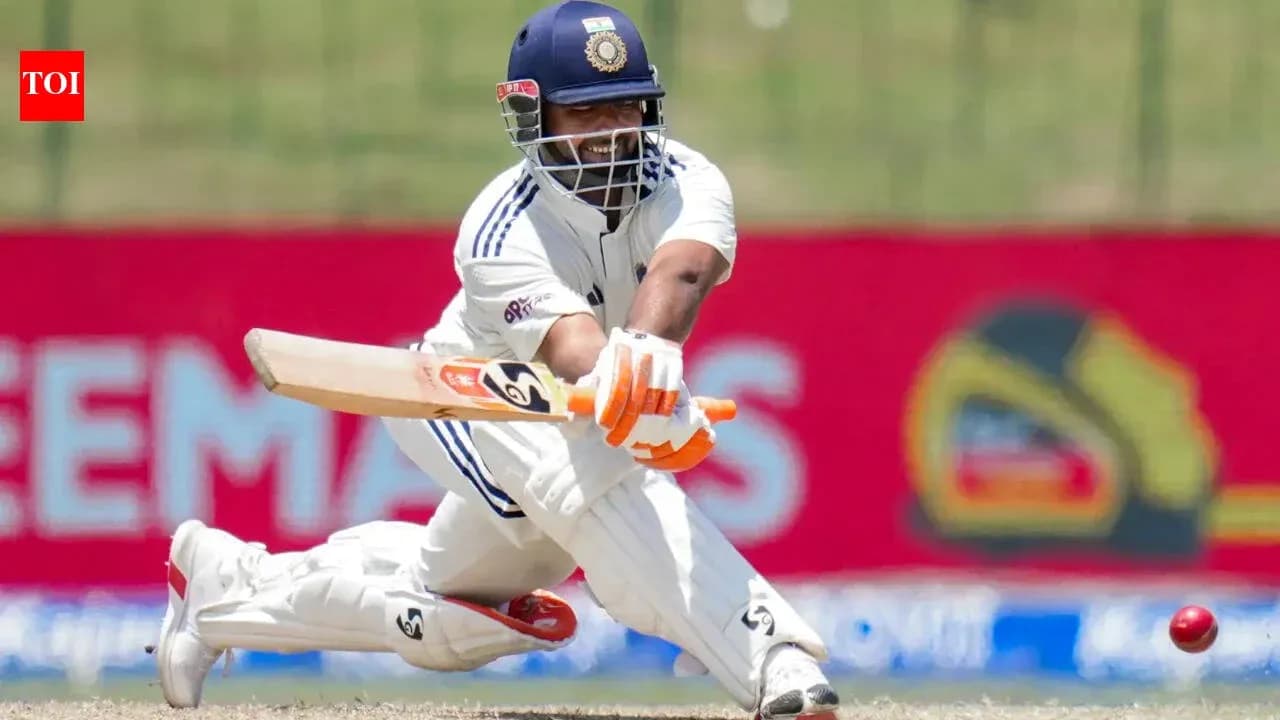
Ravichandran Ashwin has never been one to dress up an opinion. On his show ‘Ash Ki Baat’, the former India off-spinner turned analyst went straight at a subject many around Indian cricket tiptoe around: Rishabh Pant, the Test maverick who, in Ashwin’s eyes, still hasn’t grown fully into the role his talent demands.
Pant has just come off a solid series against Sri Lanka – 168 runs, two half-centuries, impact in both games. On paper, it reads like a reassuring return for a player rebuilding his Test career. Ashwin isn’t buying the comfort of the numbers.
“My expectation from Rishabh Pant hasn't been fulfilled till now. I am very sorry,” he said, laying down the tone. For Ashwin, the issue isn’t runs alone. It’s how and when they come, and what happens when the game tightens.
Numbers on the board, questions in the air
Pant’s approach has long divided opinion. The audacious strokeplay that turned matches in Sydney and Brisbane has also produced dismissals that leave dressing rooms stunned. Ashwin reached back to one such moment, Pant’s dismissal against South Africa in Guwahati last year, when he was captaining India in Shubman Gill’s absence.
With India under pressure, Pant charged down to Marco Jansen, lost his shape, and edged behind. High risk, low reward, wrong time. For Ashwin, that shot was not an outlier. It was a pattern.
He contrasted Pant’s tempo with that of Sonal Dinusha in the Sri Lanka series, noting that a high strike rate isn’t the problem in itself. The problem, he argued, lies in “high-risk options” chosen when the match is in the balance and India need their senior players to hold the line.
“When you have the game in your hand, these are all statements: ‘That’s how Rishabh plays.’ It is about what your team needs,” Ashwin said. The familiar defence of Pant – that his genius must be left unchained – did not convince him.
No free pass for a “once-in-a-generation” talent
The host pushed the popular counterpoint: Pant is different. He has already played iconic knocks, he wins you matches others can’t, he should be allowed his method. Ashwin’s response cut through the romance.
“Rishabh played a class knock in Sydney and Brisbane, but you couldn't have won that match without Washington Sundar and Shardul Thakur,” he reminded. One hero innings doesn’t erase the work of the others. One player’s aura cannot sit above the demands of the moment.
“It takes 11 cricketers to build a Test and win it in the last session of the game, but it takes only 1 moment of foolishness to lose a Test,” Ashwin said, summing up his central argument.
He was careful not to attack Pant’s attacking DNA. Ashwin admires the player; what he wants to see is a sharper reading of the game.
“I am just talking about the times when these chances are being taken when the game is on the line. I love Rishabh the player. It is about playing situations in this format,” he said. Then came the comparison that underlined his point.
“Sehwag and Gilchrist played high brand of cricket, but these two don't get edged out while dancing down to Marco Jansen when your team is trailing by 500 runs. Don't place these marketing lines in front of me ever again.”
The message was blunt: stop hiding behind slogans. “That’s how he plays” is not a shield when the match situation screams for restraint.
Responsibility, not romance
Ashwin’s frustration is rooted in Pant’s experience. This is no longer a kid bursting through the door. Pant has now played 50 Tests. That milestone, in Ashwin’s eyes, changes the conversation.
“Don't give one player special treatment. This once-in-a-generation player backing, then give it to everyone. Jaiswal is also such a player,” he said. If the system is going to indulge genius, it cannot be selective about who qualifies.
“All I'm saying, Rishabh, is that he is experienced; he has played 50 Tests. He needs to take responsibility. Don't come up with this ‘once-in-a-generation’ argument,” Ashwin continued.
Then came the line that stung hardest. “It is because of his decision-making that he's not playing the other two formats. The day you tell him the truth, he will be an all-format player for India.”
Pant’s current reality backs that up. He is, for now, a Test-only cricketer, out of India’s ODI and T20I squads. His red-ball place is secure, his impact undeniable, but his white-ball exile hangs over every discussion about his game.
Ashwin’s critique, stripped of emotion, is a challenge. Pant has the numbers, the memories, the aura. What he doesn’t yet have, in Ashwin’s view, is the consistency of judgment that turns a match-winner into a long-term pillar across formats.
India know what Rishabh Pant can do. The real question, as Ashwin frames it, is this: when the next big Test hangs in the balance, will Pant still be the man chasing the glory shot, or the one reading the moment and batting like the team’s future depends on it?