Rohit Sharma's Stunning Catch Amid Future Uncertainties
Rohit Sharma had already heard the murmurs. A dropped sitter at slip, a lean run with the bat, a World Cup place under scrutiny. Then he took off.
Stationed in the covers, Rohit flung himself to his left and plucked a stunning catch that cut short Finn Allen’s charge on 41. It was the kind of moment that snaps a stadium to attention. One second Allen was punching a short-of-a-length ball from Axar Patel on the up, trusting the bounce and the gap. The next, Rohit was airborne, hands outstretched, snatching the ball inches above the turf.
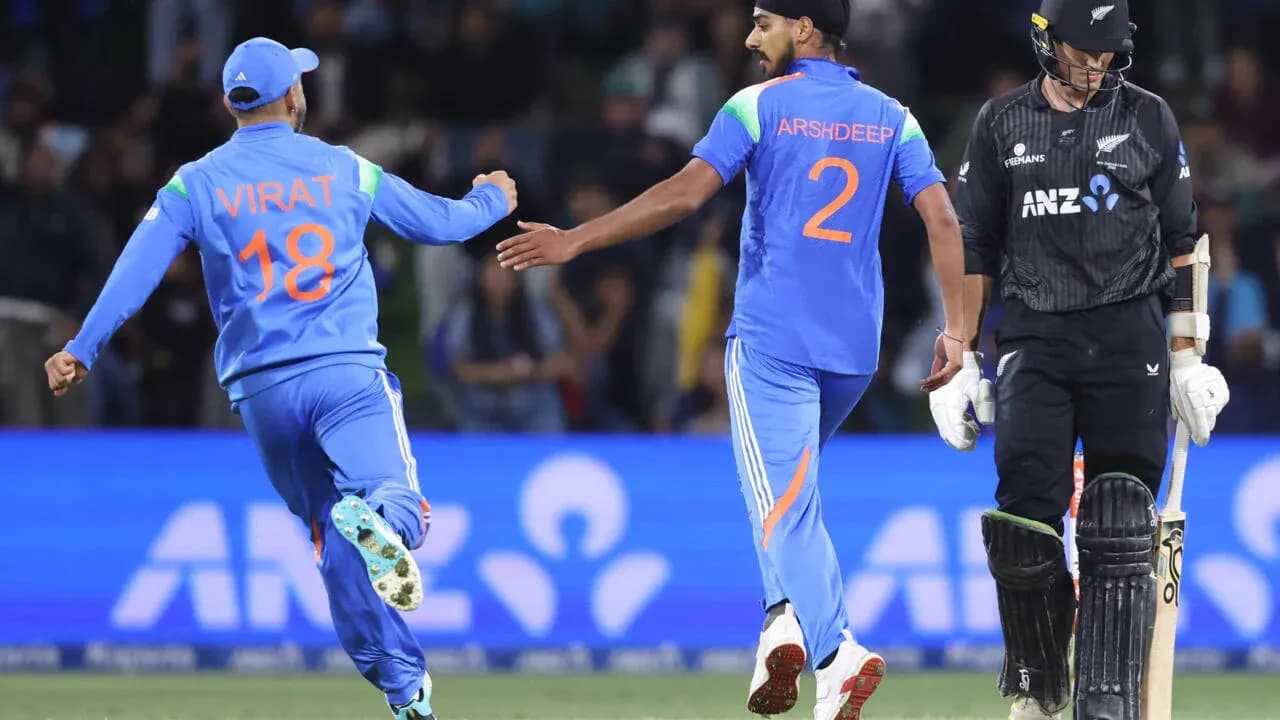
Axar knew what it meant. He broke into a sprint, arms wide, and engulfed his captain in a fierce hug, a broad grin etched across his face. For a bowler, it was a wicket. For Rohit, it was something more: a statement.
At the other end, Allen stood frozen. Head dropped, bat hammered into the pitch in frustration. He had been cruising towards a half-century, dictating the tempo, and now he had to walk off nine short of the landmark, undone not by the ball, but by a flash of brilliance in the ring.
The irony was hard to miss. Earlier in the innings, Rohit had put down a far simpler chance. Will Young, on just 5, edged Auqib Nabi to first slip. It should have been routine. Rohit spilled it. One ball later, Ishan Kishan let another edge from Young slip through his gloves. Two chances gone in two deliveries, Nabi denied the early inroads he deserved, and India’s start in the fourth ODI looked ragged.
Young cashed in. The New Zealand batter settled, then surged, building his innings methodically and turning those early reprieves into a full-blown punishment. He went on to reach three figures, his century underpinned by the knowledge that India had let him off not once, but twice in the second over of the game.
Rohit’s drop only added fuel to a debate already simmering around him. His form with the bat in the series had been modest at best: just 23 runs across the first two ODIs, with the third washed out without a ball bowled. For a player long branded as the “Hitman,” the numbers felt uncomfortably human.
So when that Axar delivery drifted outside off and Allen rocked back for the punch, the pressure on Rohit was not just about fielding. It was about perception. About sharpness. About whether a 50-over World Cup next year would still have his name inked, not pencilled, at the top of India’s order.
He judged it perfectly. The trajectory, the pace, the dip — everything. No hesitation, no half-step. Just a full-blooded dive and clean contact with the ball. In one movement, he silenced the immediate noise, at least in the field.
Social media lit up. Clips of the catch bounced around timelines, fans marvelling at the athleticism from a player some had begun to question. The same hands that had fumbled a straightforward chance now delivered a highlight-reel moment.
Yet the bigger picture does not vanish with one catch. Rohit’s batting remains under the microscope. India’s selectors are weighing options for the second opener’s role, and the numbers from this series have not strengthened his case. The World Cup clock keeps ticking, indifferent to reputations and past glories.
On the day, Rohit reminded everyone he still has the instincts, the reflexes, the competitive fire. The catch in the covers was a flash of the old authority, a veteran refusing to fade quietly.
What comes next will not be decided in the air over extra cover, but in the runs column. And that is the part of the scorecard Rohit Sharma can no longer afford to leave empty.