Santner Prepares for Kohli–Rohit Return as India Faces New Zealand
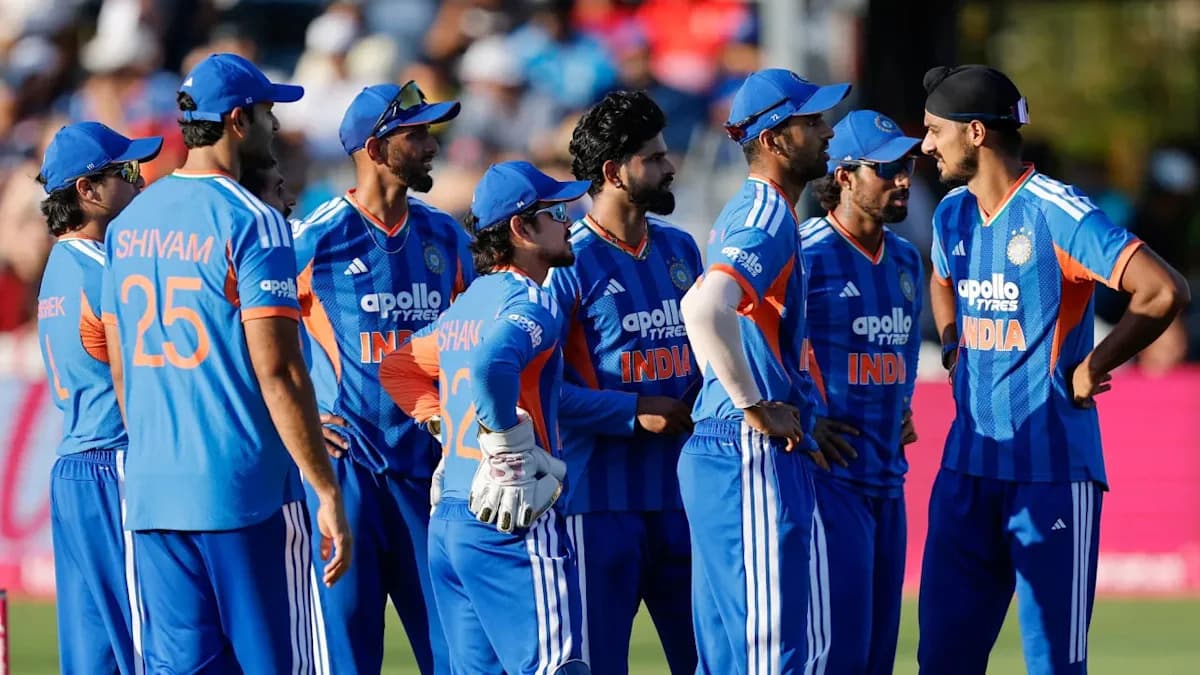
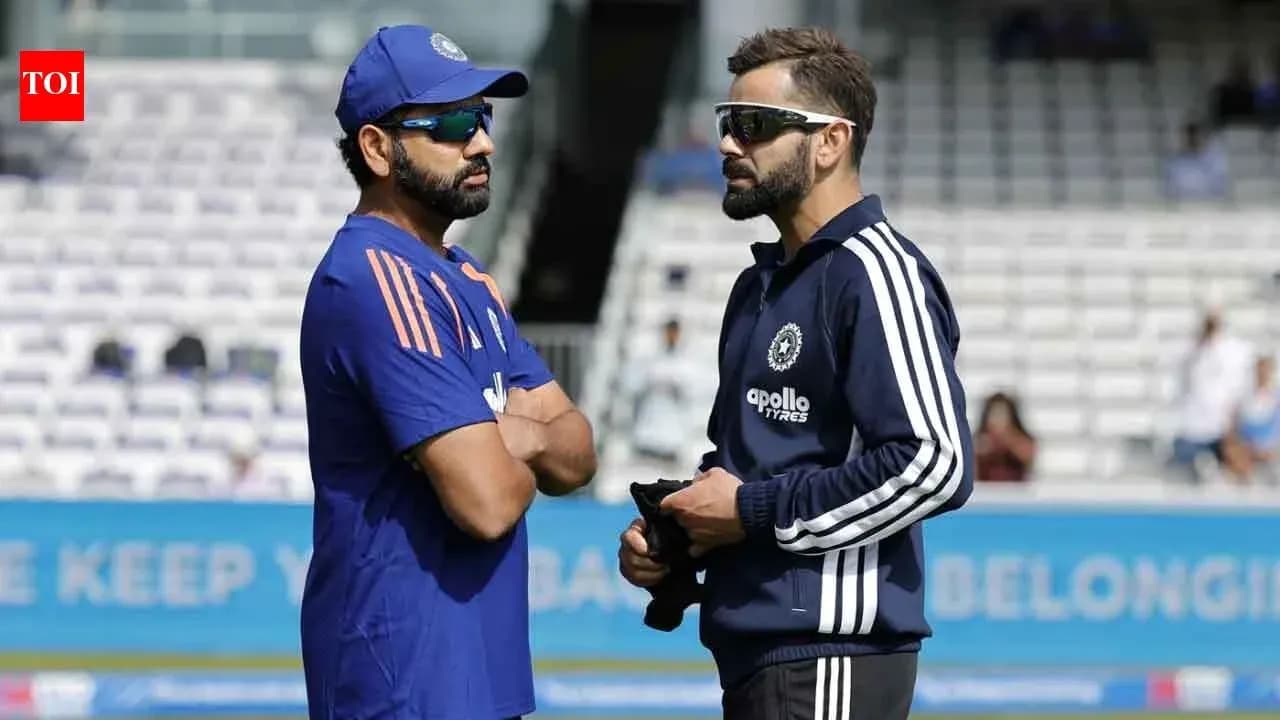
Mitchell Santner knows exactly what is coming later this year. Virat Kohli and Rohit Sharma, now India’s one-day specialists, will be back in New Zealand – and the Blackcaps captain is under no illusions about the scale of the task.
“It is going to be a challenge,” Santner told PTI, laying it out without fuss. Kohli and Rohit, he said, remain “masters of the ODI game” and have “taken a liking to some New Zealand pitches in the past. Hopefully, not this time around.”
India’s tour is a long, layered one: five T20Is, five ODIs and two Tests through October and November 2026, stretching from Christchurch to Wellington, Auckland to Mount Maunganui. For both teams, it doubles as a dress rehearsal for the ODI World Cup the following year.
“This is all a lead-up for the World Cup next year in ODIs,” Santner said. “Everyone is trying to figure out their best team; what that might look like for October next year with limited games.”
The schedule gives both sides room to experiment. It also leaves no hiding place.
Beating India at home the first target
Santner’s priorities, though, are clear. Before World Cup permutations and squad combinations, he wants a statement result on home soil.
“We’ve got five (matches) against India, three against Sri Lanka at home and then it is World Cup prep in England (in September 2027), right before the World Cup,” he said.
Then came the line that will resonate in New Zealand’s dressing room.
“First things first, you want to win a series against India at home, which would be an awesome thing. Then it is (about) trying to find what the make-up might look like come October next year.”
New Zealand’s ODI calendar is tight but pointed: India and Sri Lanka at home, then a tune-up in English conditions. Santner knows that beating India in New Zealand, with Rohit and Kohli back in the mix, would send a message well beyond the series itself.
Memories of a 3–0 shock and a new-look India
When talk turns to Test cricket between these sides, the conversation inevitably drifts back to India’s last home series against New Zealand. It ended in a stunning 3–0 defeat for the hosts, snapping an unbeaten home run that had stretched over 12 years and 18 series.
Santner was at the heart of that upset. He ripped through India in Pune with match figures of 7/53 and 6/104 in the second Test, sealing the series and etching his name into New Zealand’s modern Test folklore.
He knows this time will be different. India’s Test side has changed, fresh faces replacing some of the old guard, and many of them have never played red-ball cricket in New Zealand.
“I think what we spoke about before is trying to adapt quickly,” Santner said, reflecting on what awaits India’s newer players. “For a new-look India side, it is probably going to be the first time some players have been playing red-ball (cricket) in New Zealand, where the pitches will be a little bit foreign. They will probably do a bit more than they might do back home.”
Green seams, sideways movement, and the constant question: play or leave? For those raised on Indian pitches, the learning curve could be brutal.
A “well-rounded” India and a series with bite
Santner’s respect for India’s current Test squad runs deep. He sees a group with balance, depth and a serious threat with ball in hand.
“If you look at their squad, it is a very well-rounded squad,” he said. “You throw (Jasprit) Bumrah back into the bowling attack, you have got (Mohammed) Siraj, (Prasidh) Krishna with the bounce. You have got (Ravindra) Jadeja and (Manav) Suthar to bowl spin. You have got probably a fourth seamer in there as well.”
That blend of high-class pace and versatile spin, in his eyes, gives India enough to travel.
“It is shaping up nicely. I think it is going to be a great series. Traditionally, it can do a little bit in New Zealand at that time of the year,” Santner said.
If the ball moves, both attacks will fancy themselves. The margin for error for batters shrinks, the drama spikes.
‘Fight fire with fire’: how to bat in New Zealand
Santner also lifted the lid on what he believes is the right way to approach Test batting in New Zealand. It is not just about survival.
“It could be trying to fight fire with fire, playing your shots,” he said. At times, though, the old virtues return. “There might be times we need to sit back and let the bowlers go for a bit, try to get the shine off the ball.”
That balance – counterpunch and caution – often decides Test matches in New Zealand. One misjudged leave, one ambitious drive, and the innings can unravel.
“There is a lot that can go on in the Test matches in New Zealand,” Santner said. “It is going to be an exciting series and one that we can’t wait for.”
Why only two Tests?
The only frustration, for purists, is the length of the Test leg: just two matches.
When asked why, Santner pointed to New Zealand’s long-standing pattern of shorter Test series and the realities of the modern game.
“For a long time, New Zealand played two-match series. There’s obviously the money side of it as well,” he said. “I know it costs a lot to play Test cricket. (It is about) timing as well; white-ball brings in the crowds in New Zealand, it brings the money. That’s why I guess it is the 10-2 split.”
Ten white-ball games, two Tests. The ledger is clear. So is the commercial logic.
Yet even within that squeeze, Santner sees the upside. Playing India, even in a two-Test window, remains a marquee opportunity.
“Whenever India come, even if it is only two Test matches, it is going to be exciting. Everyone wants to challenge themselves against the best in the world and they are up there. For us, it is going to be an important series like it is for India with the (World Test Championship) points that are on offer.”
Two Tests, high stakes, World Test Championship points on the line, and a proud home side desperate to turn over India again. For New Zealand, this is not just another stop on a crowded calendar. It is a chance to prove that last 3–0 shock was no anomaly – and that even a “well-rounded” India must still earn every inch in their backyard.