Shreevats Goswami: The Promise of a Cricket Prodigy
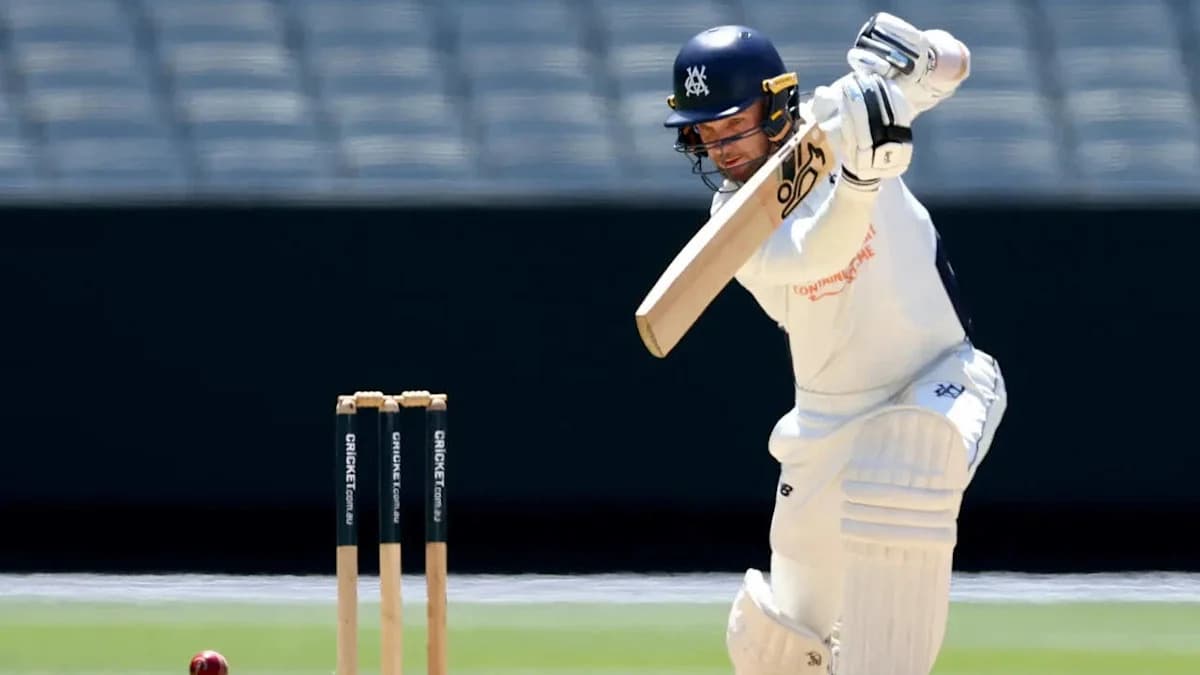
At 19 years and one day old, Shreevats Goswami walked into the first-ever IPL like it was the most natural thing in the world. Left-handed, slight, a wicketkeeper with soft hands and a busy blade, he took guard against a Delhi attack led by Glenn McGrath and batted as if the stage had always belonged to him.
Fifty-two off 42 balls for Royal Challengers Bangalore. Player of the Match. On debut. In a defeat, no less.
It looked like the start of a straight-line story: age-group prodigy, IPL breakout, fast-track to India colours. It never became that.
The boy who kept answering every question
Goswami did not appear out of nowhere in 2008. Before the Under-19 World Cup in Malaysia, he had already stacked up serious scores on India’s youth tour: 97 against South Africa, 104 against Bangladesh. He arrived at the World Cup not as a passenger in Virat Kohli’s side, but as one of its pillars.
In the semi-final against New Zealand, up against a group that would later give world cricket Kane Williamson, Tim Southee, Trent Boult and Corey Anderson, Goswami top-scored with 51 in a tense chase. Kohli, the captain who would go on to define an era, made 43. On that day, in that dressing room, the gap between them did not feel enormous.
India lifted the trophy. A few weeks later, Goswami was in the IPL, trading Under-19 blues for the red and gold of RCB. The left-hander’s debut fifty came the day after his 19th birthday. By season’s end, he had picked up another honour: Best Under-19 Player of the tournament, the first in the lineage of what is now called the Emerging Player of the Season.
The pattern was clear. Give him a stage, he performed. Give him a bigger one, he performed again.
And yet, the next door stayed shut.
A domestic season that should have changed everything
If the teenage hype could be dismissed as promise, the 2009-10 Vijay Hazare Trophy felt like proof.
Playing for Bengal, Goswami plundered 568 runs in seven innings. Three centuries, one fifty, runs flowing with the sort of authority that usually forces selectors to take notice. He finished as the tournament’s leading run-scorer and made 81 in the final against Tamil Nadu. He was 20 years old and already had, on his CV, an Under-19 World Cup title, an IPL award and a season as the top scorer in India’s premier one-day competition.
Still, no India A call. Not even a place in the India Emerging squad.
Later, he would talk about timing, about how his moment never quite lined up with the national team’s needs. It wasn’t bitterness so much as a clear-eyed reading of an era.
Dhoni for India, Saha for Bengal
For a wicketkeeper-batter trying to break into India in that period, the roadblock had a name and a captaincy. MS Dhoni was not just India’s wicketkeeper; he was the captain, the finisher, the talisman. There was no vacancy sign hanging on that door.
At home, the story repeated itself in a different form. Bengal already had Wriddhiman Saha, who would go on to become India’s first-choice Test wicketkeeper for a stretch and Bengal’s long-term man behind the stumps. Goswami often found himself as the second option in the very role he needed to own.
His first-class batting numbers never quite screamed for promotion either. Across 61 matches, he scored 3,019 runs at an average just above 32. Respectable. Solid. But in a country drowning in batting numbers, not the kind that forces a selection meeting to stop and reconsider its plans.
There were peaks, and one of them was enormous. In 2016, with Bengal in trouble against Madhya Pradesh, Goswami produced the innings of his first-class life: an unbeaten 225. It was the kind of knock that shows what lives inside a player, even if it doesn’t turn into a career-defining turning point.
White-ball cricket, though, kept telling a different story.
In the 2014-15 Vijay Hazare Trophy, Goswami hammered 447 runs in six innings at an average of 111.75, with two hundreds and two fifties. Only Manish Pandey scored more in the entire competition. Two seasons later, he walked into a semi-final against a Jharkhand side captained by Dhoni and peeled off 101, sharing a 198-run opening stand with Abhimanyu Easwaran to push Bengal into the final.
He kept answering the question: can you score runs when it matters? The reply, over and over, was yes.
The promotion he needed still didn’t come.
India A, but too late
The India A call that should logically have followed that 568-run season arrived seven years late. In 2017, Goswami finally got his shot. He was 28.
The landscape had shifted again. Dhoni remained in the picture. A new generation of wicketkeepers had already begun to push through, led by Rishabh Pant, who was part of the India A set-up. Goswami had his chance, but not the runway. The performances did not turn into the breakthrough he had chased for a decade, and the senior India cap stayed out of reach.
His IPL journey mirrored that stop-start rhythm. After the blaze of 2008, he never managed to lock down a permanent place. Stints with Royal Challengers Bangalore, Kolkata Knight Riders, Rajasthan Royals and Sunrisers Hyderabad brought just 31 matches and 293 runs in total.
There was, however, one neat twist of fate.
A full circle in the IPL
In the 2020 IPL Eliminator, Sunrisers Hyderabad turned to Goswami because Saha was unavailable. Opponents: Royal Challengers Bangalore. The franchise where he had first walked into the league as a teenager with the world apparently at his feet.
Early in RCB’s innings, he took the catch that removed Virat Kohli.
More than 12 years earlier, they had stood side by side as Under-19 World Cup champions, both young men with the same medal around their necks and the same horizon in front of them. By 2020, Kohli was one of the defining figures of modern cricket. Goswami was a squad player, summoned in a knockout match, doing his job with quiet efficiency.
Their careers had separated long ago, but for a moment, the game brought them back into the same frame: one driving India, the other still fighting for relevance.
A career defined by what didn’t quite happen
Shreevats Goswami ended his first-class career in 2023 with numbers that tell only part of the story. They show a solid domestic cricketer. They do not show the boy who outscored Kohli in a World Cup semi-final, the teenager who walked into the IPL and took on McGrath, the young man who topped an entire Vijay Hazare season at 20, the batter who kept returning to the white-ball format and piling up runs when the spotlight had already moved on.
There was no dramatic fall, no scandal, no career-shattering injury. His journey became something subtler: a collision of timing, fierce competition and just enough inconsistency to keep him on the wrong side of the selection line.
An Under-19 World Cup winner. An IPL debut half-centurion. The inaugural winner of the award now known as Emerging Player of the Season. The leading scorer in a Vijay Hazare Trophy campaign.
In another era, those lines might have been the prelude to an India cap. In his, they became the full story.