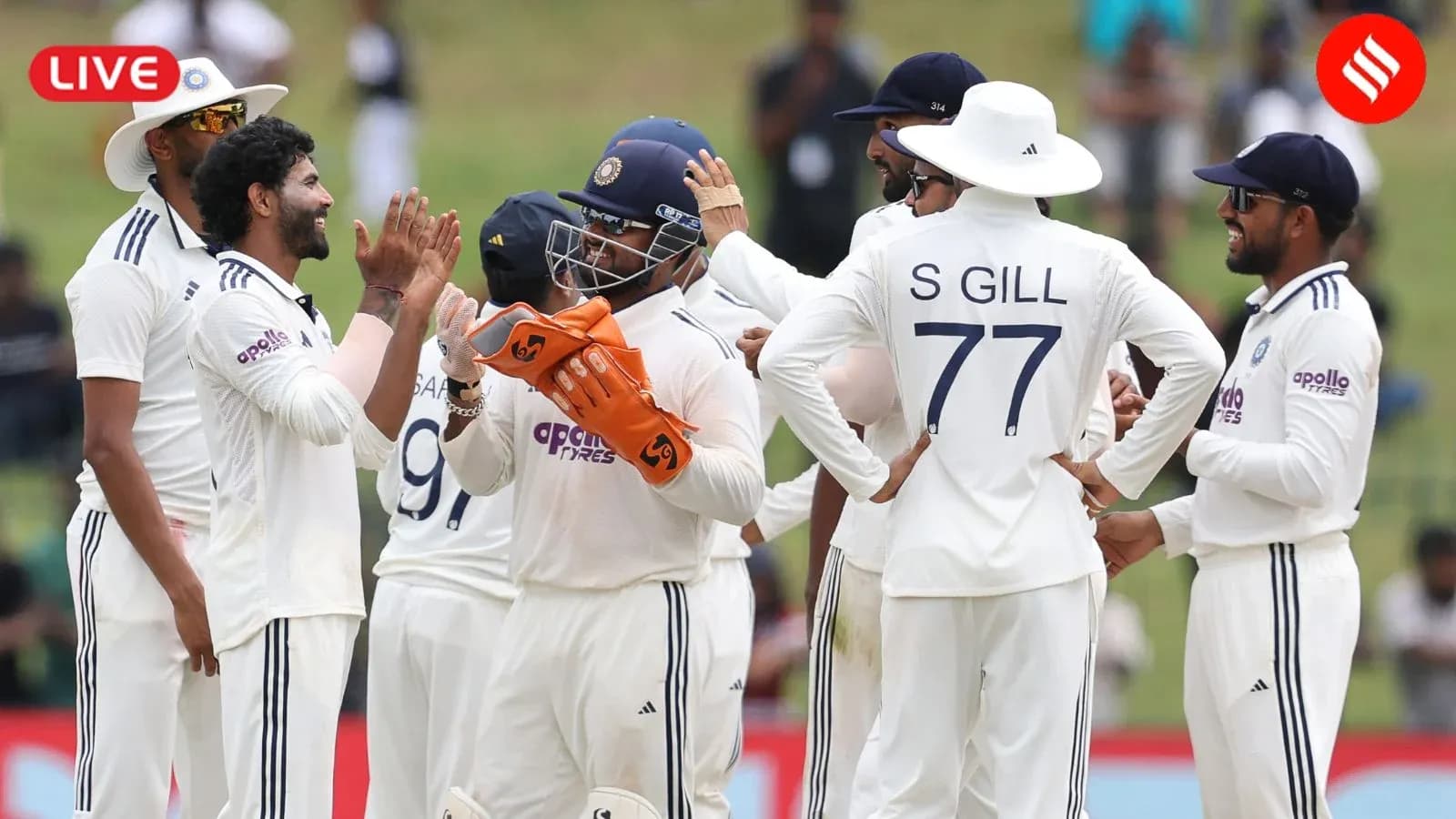
Sonal Dinusha's Heroics Secure Draw for Sri Lanka in Colombo
On a flat, fading fifth-day pitch in Colombo, India ran into a familiar, stubborn wall. His name, once again, was Sonal Dinusha.
The 23-year-old left-hander, already the story of this series, produced yet another innings of resistance to drag Sri Lanka from the brink of a series whitewash to the safety of a draw in the second Test. Batting through pain, marshalling the tail, and draining the life out of India’s attack, Dinusha turned what looked like India’s match into Sri Lanka’s escape act.
By the time the captains shook hands late on the final evening, Sri Lanka were 395 for 8 following on, the lead at 170, the result beyond doubt and the Indians out of ideas.
A Series That Belonged to One Man
This was Dinusha’s Test, but in truth, it has been his series.
He began the final day on 284 for 6 in Sri Lanka’s second innings, alongside Keshara Nuwantha, with India needing four wickets and plenty of time. The script, on a bright, humid Colombo morning, seemed straightforward: knock over the tail, chase a modest target, walk away with a 2–0 clean sweep and a healthy pile of World Test Championship points.
Dinusha refused.
He had already scored a century in the first innings – his second of the series – to drag Sri Lanka from a heavy deficit to 290 all out and at least force India to enforce the follow-on rather than bat again. That first-innings hundred came under pressure, with wickets tumbling around him, and featured the kind of composure and shot selection that marks out a long-term Test player. When Saransh Jain finally removed him on 100, India’s lead still stood at 303.
India, quite rightly, put Sri Lanka back in. The bowlers had the momentum, the weather forecast wasn’t kind, and the pitch, though docile, still offered just enough for quality spin and persistent pace.
Sri Lanka’s top order, though, found a second wind.
The Follow-On Fightback
Lahiru Udara fell early to Mohammed Siraj’s short ball, but from 10 for 1, Sri Lanka’s intent was clear. Kamil Mishara and Pasindu Sooriyabandara counter-attacked, taking on the spinners and seamers alike. Pasindu, especially, broke from his more measured first-innings approach, driving and sweeping with authority as the 50-run stand came up in just 62 balls.
India chipped away. Jadeja trapped Mishara sweeping, umpire’s call on the stumps enough to send him back. Saransh Jain, making his debut, had already impressed with his control and variations; he added to that by picking up wickets and a sharp boundary catch in the deep. By lunch on Day 4, Sri Lanka were 83 for 2, still trailing by 130, but no longer shell-shocked.
The afternoon belonged to the hosts. Pasindu and Kamindu Mendis stitched together a 100-run stand that changed the tone of the Test. Kamindu reached a punchy half-century, peppering the leg-side boundary and forcing Shubman Gill to rethink his fields. Manav Suthar, so assured earlier in the series, suddenly found himself under attack, his first real trial in Test cricket.
India’s lead dwindled. The bowlers looked tired. The decision to enforce the follow-on began to show its downside: back-to-back long spells on a pitch offering little beyond occasional turn from the rough.
Just when Sri Lanka seemed to be dictating terms, India hit back.
Prasidh Krishna, used in short, hostile bursts as Morne Morkel had outlined, bounced out Kamindu with a trap set for the pull. The shot, high-risk for that stage of the game, went wrong; Gill ran back to take a fine catch. Manav Suthar then removed Dhananjaya de Silva with a soft inside edge to gully and later lured Pasindu down the track for Rishabh Pant to complete a stumping.
From 171 for 2, Sri Lanka slipped to 221 for 6. The follow-on gamble looked vindicated again. Dinusha walked out, yet again, with a rescue job on his shoulders.
Dinusha vs India, Part Two
If his first-innings hundred was about survival and skill, the second was about endurance.
By the time rain and bad light ended Day 4 at 228 for 6, Dinusha was still there, the game finely poised. India had broken through Sri Lanka’s middle order, but the lead remained slim, and the forecast for Day 5 was clear. The visitors needed quick wickets in the morning to keep the door to victory wide open.
They didn’t get them.
Nuwantha, who had already frustrated India in the first innings, dug in alongside Dinusha. The pair batted through the entire morning session of Day 5 without being separated. India’s spinners, Jadeja, Suthar and Jain, beat the bat often enough to keep belief alive, but the surface never quite turned into the minefield they craved.
Jadeja, India’s most threatening bowler on the day, had an lbw decision against Nuwantha overturned on review just before lunch. That moment summed up India’s morning: close, probing, but unrewarded. At the interval, Sri Lanka were 330 for 6, the lead 116, the draw suddenly a realistic, even probable outcome.
Gill rotated his bowlers, searching for something different. Siraj, used sparingly, kept pounding the middle of the pitch, testing Dinusha around the rib cage, an area that had troubled him earlier. Prasidh kept bending his back. The spinners switched ends, changed angles, and flirted with rough patches outside off stump. The slip cordon, curiously, was often absent for the seamers, even as they hunted for edges with the old ball.
The pitch, though, had gone to sleep.
The Tail That Wouldn’t Budge
The breakthrough finally came from Manav Suthar, who trapped Nuwantha with a delivery that had been missing the edge all morning and finally kissed it on the way to Dhruv Jurel. Relief for India, but not release.
Prabath Jayasuriya walked in and did exactly what Sri Lanka needed: he played straight, stayed within the line of the stumps, and refused to flirt outside off. The surface, never venomous, allowed him to trust his defence. Jadeja and Suthar kept finding turn, but not quite the ball with a name on it.
When Jayasuriya eventually fell driving Jadeja, India sensed one last opening. Lahiru Kumara, who had faced 52 balls in the first innings, strode out again with a familiar brief: survive.
He did far more than that. Kumara soaked up deliveries, blocked with a straight bat, and, crucially, allowed Dinusha to manage the strike. As Dinusha’s back began to trouble him, he cleverly began to give Kumara the first or second ball of the over, then trusted his partner to see out the rest. It worked. Over after over slipped away.
By Tea, Sri Lanka were 383 for 8, Dinusha stranded on 98, the lead 170. India’s chances of forcing a result were evaporating with every forward defensive.
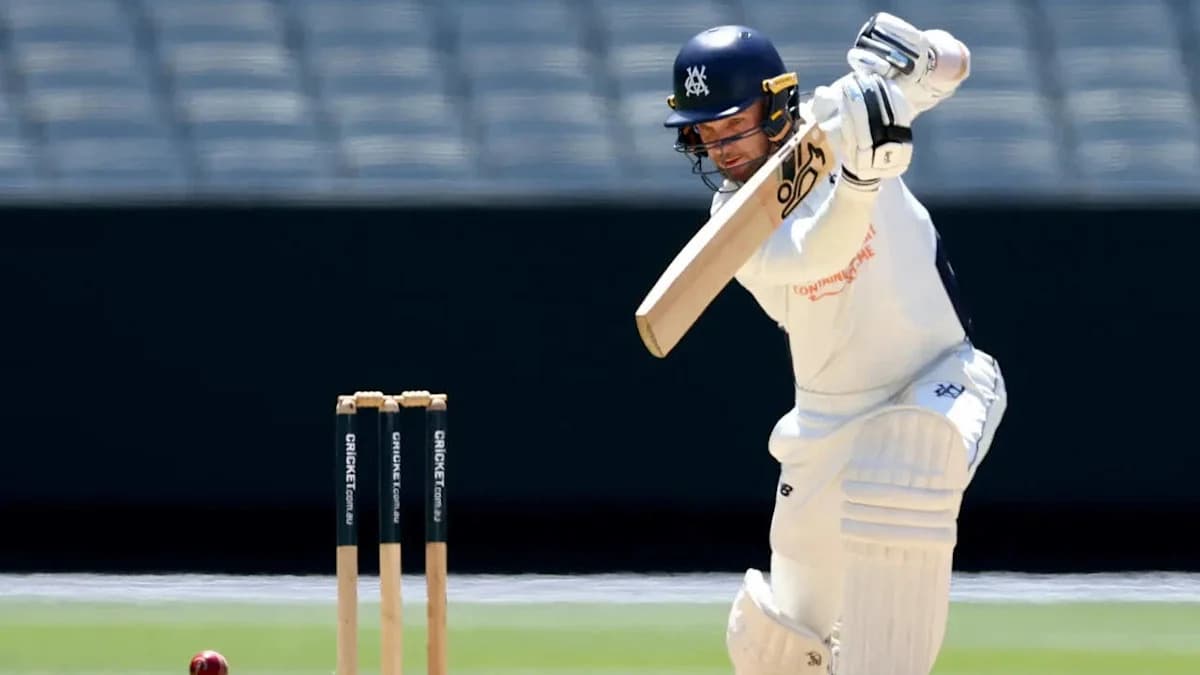
The moment finally arrived in the final session. Dinusha nudged his way to a third century of the series – a staggering return against an Indian attack of this quality. It was not a flashy hundred. It was a craftsman’s piece: sweeps to disrupt the spinners’ lines, soft hands in defence, sharp running when his body allowed it.
His sweep, in particular, became India’s recurring nightmare. The same stroke that has haunted them from the bats of Ben Duckett and Tom Latham in recent years now came from a young Sri Lankan left-hander, repeatedly picking singles and the odd boundary, dragging fields around and draining overs from the game.
Even as his movement stiffened, his concentration never dipped. He batted with the tail like a veteran, choosing his moments, farming the strike when needed, trusting Kumara when the big quick settled in. It was grit wrapped in method.
India Run Out of Road
There was a point, as Sri Lanka’s lead crept past 150, when the only real question left was whether the hosts would be bold enough to declare and tempt India into a chase. With Dinusha cramping and the tail firmly in occupation mode, that prospect faded quickly.
The Indians, for their part, also seemed to accept the inevitable. The fields grew more conservative, the bowling plans more about containment than miracles. Jadeja, who had been India’s best bowler across the day, left the field with heel discomfort in the final session, a further dent in their already fading hopes.
Gill had tried everything across two long Sri Lankan innings: early enforcement of the follow-on, aggressive fields, rapid bowling changes, bursts of pace, and long spells of spin. He had leaned on Jadeja’s accuracy, trusted Suthar in his first real stress-test, and backed debutant Jain, who responded with control and, eventually, wickets.
Yet the match kept drifting towards one man in white, hunched over his bat, back stiff, eyes clear.
Sonal Dinusha had already denied India once in the first innings. He did it again in the second, this time with the series on the line. Three centuries in a single series against India, on a pitch that never quite died but never quite came alive, is a statement few young players make.
Sri Lanka will leave Colombo with their pride restored and a new cornerstone in their middle order. India will leave with a series win, but also with questions: about slip fields for their seamers, about how to finish off stubborn tails on flat decks, and about how to handle a batter who sweeps them into submission.
One thing is certain: the next time India see Sonal Dinusha’s name on a team sheet, they will remember Colombo, and the day a drawn Test felt, in Sri Lankan dressing-room terms, like a victory.