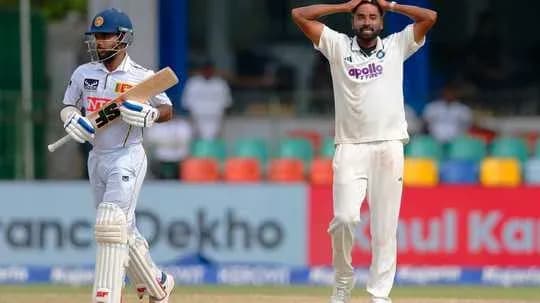
Sonal Dinusha's Resilient 133 Saves Sri Lanka from Defeat
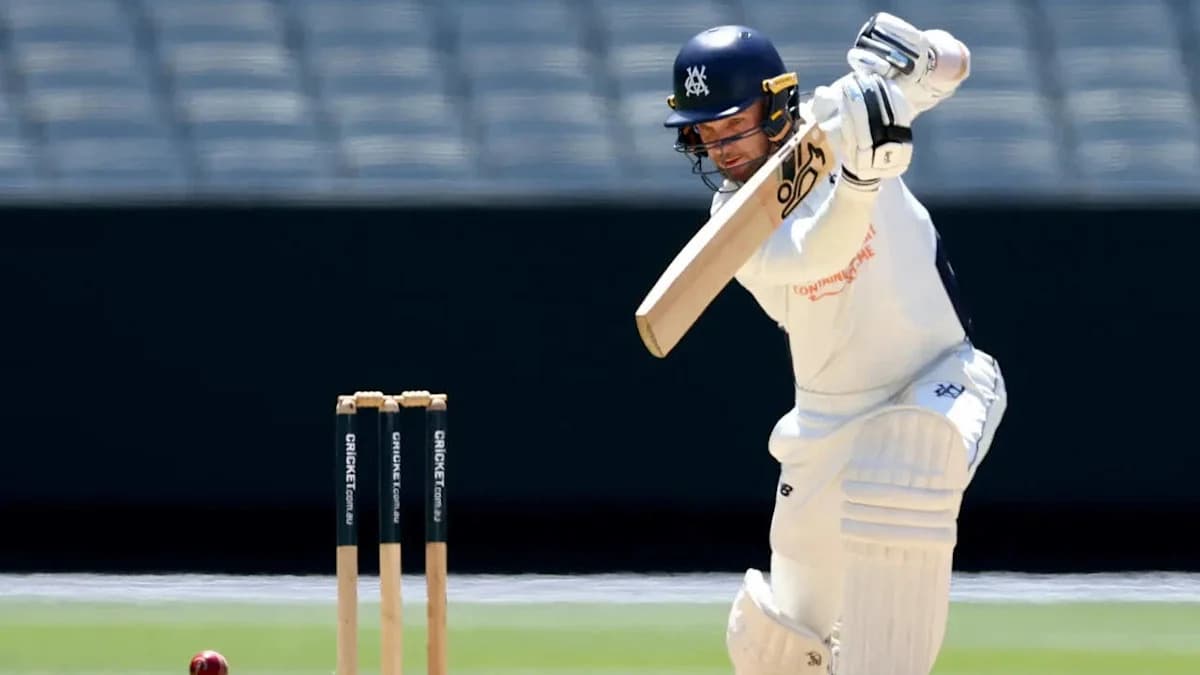
Sonal Dinusha walked off the SSC outfield with his bat raised and his shirt drenched, not in glory of victory, but in something just as valuable for a dressing room under siege: survival.
Across seven stubborn hours in Colombo, the left-hander turned what looked like a formality into a deadlock, his unbeaten 133 dragging Sri Lanka to safety and denying India a sweep after they enforced the follow-on. For the first time in nine attempts against Sri Lanka, India could not finish the job after making the opposition bat again.
A chase that never came
India began the final morning with the game tilted heavily in their favour. Four wickets. Three sessions. A pitch that had started to grip but still behaved with largely honest bounce and pace. It was the kind of scenario their spinners usually devour.
But Dinusha and Keshara Nuwantha had other plans.
The pair resumed with Sri Lanka still under the shadow of a first-innings deficit and batted as if the only clock that mattered was the one on the dressing-room balcony. India took the second new ball within the first half-hour, hoping the harder seam would slice through resistance. Instead, it thudded repeatedly into the middle of Dinusha’s bat, then Nuwantha’s.
The seventh-wicket stand grew slowly, almost defiantly, to 88 runs. More than 40 overs disappeared with it. Dot by dot, leave by leave, the deficit vanished. India’s imagined fourth-innings chase never even made it to the scoreboard.
India finally break through
The pressure finally told just after lunch.
Manav Suthar, who had been probing away, found a ball that bit harder and quicker than most. It spun sharply, kissed the outside edge of Nuwantha’s bat, and flew to second slip. The partnership was broken, Nuwantha gone, and with it one layer of Sri Lanka’s resistance.
India sensed the opening. They crowded the bat, hunted for rough patches, and tightened the lines. But Dinusha refused to blink.
At the other end, Prabath Jayasuriya dug in. He survived 28 balls, scratching and blocking, until Ravindra Jadeja drew him into a drive. The outside edge went straight to Dhruv Jurel at second slip. Another crack in the wall. Another roar from the fielders. Sri Lanka’s lead had moved past 150, but with two wickets left and almost a session and a half remaining, India still had time and incentive to go for the kill.
Kumara and Dinusha shut the door
Just as India leaned in for the final push, Lahiru Kumara stepped into a role he rarely plays.
Known more for his work with the ball, Kumara became Dinusha’s shield and sounding board. He trusted a simple method: survive. The sweep became his ally against the turn, his low hands and strong base helping him smother Jadeja and Suthar.
Runs came in drips. Time flowed in streams.
Together, Dinusha and Kumara soaked up 169 deliveries for just 47 runs. It was old-fashioned, attritional batting, the kind that frays bowlers’ tempers and flattens fielding sides. Somewhere in that grind, Dinusha reached his century, raising his bat amid a stadium that understood the value of the innings long before the scoreboard confirmed it.
India did get a sniff. Kumara, perhaps tempted by the moment, attempted a slog sweep soon after Dinusha’s hundred. The ball ballooned towards deep midwicket, where Jurel rushed in. It dropped in front of him. A half-chance, maybe less, but on a day like this, it felt enormous.
Kumara eventually fell for 12, inside-edging to short leg where Yashasvi Jaiswal made no mistake. By then, the overs remaining had begun to work against India, not Sri Lanka.
Dinusha stands firm to the end
Once the tail thinned, Dinusha took full command of the tempo. He refused risky strokes, picked off the loose balls, and rotated just enough to keep the strike ticking over without exposing his partners unduly.
The Indian spinners kept coming. Fields shifted, close catchers shuffled, seamers probed for reverse. The pitch, though, remained too honest to be an ally. The turn was there, but predictable. The bounce held true. On such a surface, a batter as settled as Dinusha was always going to be hard to dislodge.
Ball after ball, over after over, the prospect of an Indian chase faded. By the final hour, the contest had narrowed to one question: could Dinusha bat out the day? He answered it with calm defence, the occasional release stroke, and not a hint of panic.
When stumps were finally drawn, he was still there, unbeaten on 133, having carried Sri Lanka from the brink of defeat to the safety of a draw and away from the ignominy of a whitewash.
India will look back at the day and see a match they controlled, a follow-on they enforced, and a chase they never got to start. Sri Lanka will remember something else: the day a young batter turned a lost cause into a statement of resolve, and reminded everyone that in Test cricket, sometimes survival is its own kind of victory.