Sophia Dunkley Scores Century as England Sweeps Ireland in ODI
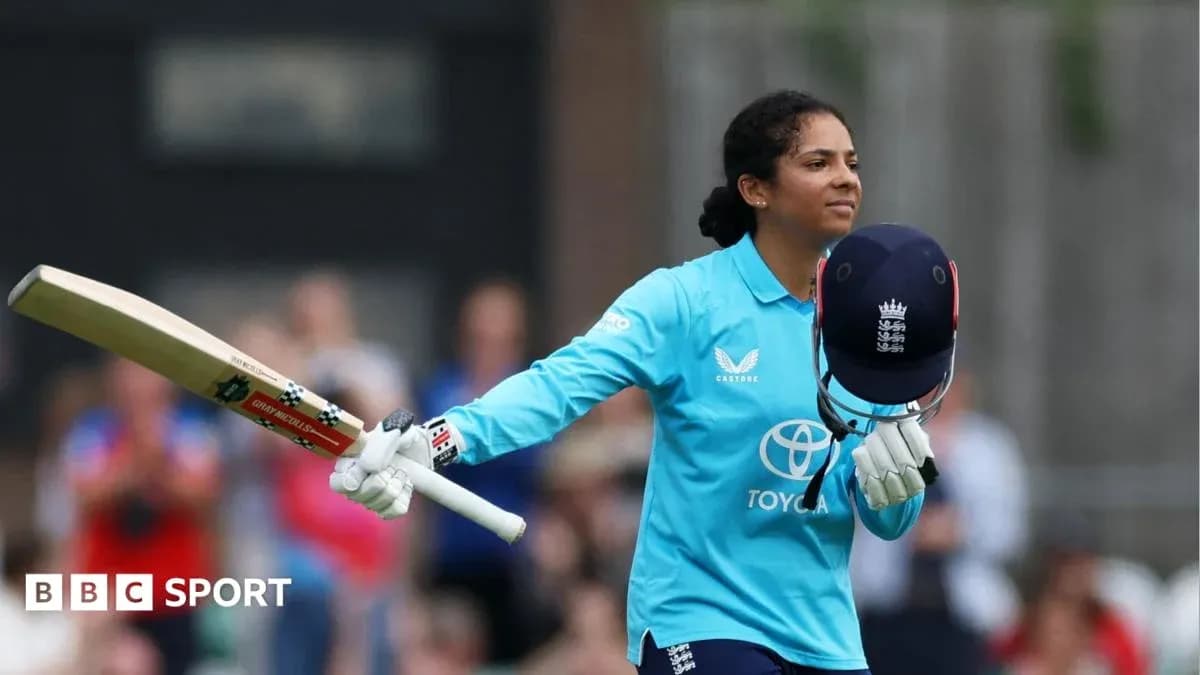
Sophia Dunkley walked off New Road to a standing ovation, bat aloft, the scoreboard frozen on the number that had defined England’s day: 119. Run a ball. Authoritative, unfussy, and far too much for Ireland.
Her hundred set the tone for a 114‑run victory in the third ODI, sealing a 3-0 sweep and closing England’s international summer with a statement rather than a shrug.
Dunkley drives England, then watches collapse
On a placid Worcester surface, Dunkley settled quickly and never really loosened her grip. She and Maia Bouchier put on 73 for the first wicket, a partnership that felt controlled rather than frantic. Bouchier, in the kind of rhythm batters crave, carved 39 and again looked every inch an opener who expects to stay.
When Bouchier departed, England did not slow. Jodi Grewcock joined Dunkley and the pair kept Ireland’s attack under the thumb, Grewcock moving to 35 before falling to a sharp caught-and-bowled. It was a waste of another promising start, but by then Dunkley had already built the platform.
Her second international century came with the same calm tempo that had underpinned the innings from the start. She worked gaps, punished anything short, and never let Ireland’s bowlers settle. By the time she fell for 119 in the 36th over, England sat at 260-4 and a record total seemed within reach.
Then the innings buckled.
Freya Kemp, who had hinted at a late assault with 23, holed out to long-on and triggered a slide. Wickets began to tumble in clusters. The scorecard, so orderly for most of the afternoon, suddenly looked ragged as a string of single-figure scores dragged England back.
Only Dani Gibson resisted the trend. She pieced together an ODI-best 41, fighting to keep England moving while the innings frayed around her. Even so, the hosts lost their last six wickets for just 31 runs and were bowled out for 291 with seven balls unused.
Cara Murray deserved every bit of the applause from the Irish huddle. The leg-spinner led the fightback with 4-56, cleverly changing pace and forcing errors as England’s ambition outstripped their execution. After Dunkley’s dismissal, England managed just seven boundaries – a stark contrast to the fluency of the first 35 overs.
They walked off faintly frustrated. But they had more than enough.
Filer and Villiers shut the door
Once the new ball was in England’s hands, the imbalance between the sides reappeared. Ireland never looked truly in touch with the chase.
Amy Hunter battled for 39 from 58 balls, the top score in a reply that never gathered momentum. She absorbed pressure, picked off what she could, and tried to anchor the innings. The problem was everything around her.
The run rate crept up early and never came back down. No Irish batter scored at a strike-rate above 100, and as overs ticked by the required rate drifted into the distance, out of reach on a surface that still held few demons.
Lauren Filer hit the pitch hard and broke through with 3-27, her pace too sharp once Ireland were forced to chase the game. Mady Villiers matched her with three wickets of her own, prising out middle-order resistance and ensuring there would be no late surge to make the margin respectable.
By the time Ireland were bowled out for 177 in 44.2 overs, the contest had long since slipped into formality. The gulf, across the series, had been clear.
Summer closed, bigger stages ahead
This final ODI wrapped up England’s international summer, and they leave it with a clean sweep, a commanding win, and a top-order batter in Dunkley who looks ready for heavier traffic.
Next stop is the Champions Trophy in February, with a multi-format series against West Indies and three ODIs against Sri Lanka pencilled into the calendar before then, dates still to be confirmed.
If Worcester was the full stop on this chapter, it also felt like a rehearsal. Performances like this are no longer about Ireland. They are about whether England can carry this authority onto the biggest stages, where the margin for error is smaller and centuries like Dunkley’s define tournaments, not just series.