South Africa’s Fast-Bowling Crisis Deepens as Ngidi Injured
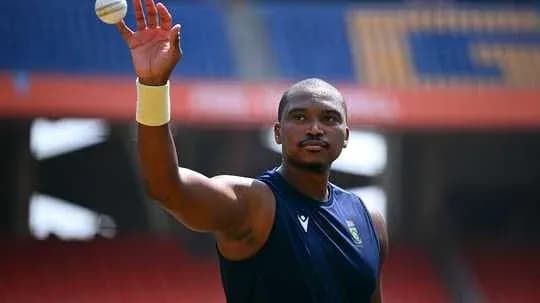
Lungi Ngidi has limped into a club no fast bowler wants to join. The membership is small, exclusive, and growing at an alarming rate: South Africa’s injured quicks.
He is the fifth frontline seamer to go down, and like most of the others, the problem is the same old villain — the hamstring.
Cricket South Africa confirmed on Friday that Ngidi has been ruled out of the ODI series against Australia, which starts at Kingsmead on Thursday. He joins Kagiso Rabada, Ottneil Baartman and Lutho Sipamla on the treatment table with hamstring trouble. Nandré Burger is the outlier, sidelined by a recurring back issue.
It sounds like a crisis. It might actually be a pattern.
The Hamstring Epidemic
“What is it with all the hamstrung hamstrings?” is the obvious question. The answer, according to Shuaib Manjra, lies in the calendar rather than the physio’s room.
“It’s not surprising, because if you look at any sport there are two peaks in hamstring injuries — the beginning of the season and the end of the season,” CSA’s former chief medical officer and national men’s team doctor told Cricbuzz.
At the start of a season, players go from relative rest to full-throttle. The load spikes. Bodies that have enjoyed a breather are suddenly asked to sprint, twist and explode again. That’s when soft tissue starts to give way. At the back end, it’s a different trap: fatigue. Tired muscles lose their snap, and injuries creep in.
“So it’s not surprising,” Manjra said, and in South Africa’s case, it’s playing out almost textbook.
Ngidi’s injury came last Friday in Centurion, in the opening round of first-class matches. Turning out for the Titans against the Dolphins, he broke down just as the domestic season was finding its stride.
CSA have not put a timeline on his return, just as they have avoided firm predictions with Rabada. The question is obvious, though: will they be ready for the Test series against Australia, starting in Durban on October 9?
Tests on the Horizon, Not ODIs
The stakes explain the caution. This is not just another home summer. South Africa are defending their World Test Championship crown, the one major global title they can point to with pride after beating Australia in the final at Lord’s in June last year.
In that context, a “relatively random” ODI series against Australia is expendable. The Tests are not.
That is why a short, almost mundane five-second video of Rabada bowling — gentle rhythm, short run-up, nothing dramatic — posted on his social media on Wednesday, has been seized upon as a sliver of optimism by South African fans. He’s not charging in yet, but he’s moving. He’s bowling. That alone feels like progress.
Rabada has not played any form of cricket since May. Burger last appeared in June. Sipamla only bowled again last month after being out since July. Baartman also hadn’t been on a field since July before his latest setback.
These are not players who can simply be thrown into a Test series on the back of a couple of nets. They need overs. Real overs. “Getting the overs in the legs,” as the old phrase goes. That’s the balance South Africa’s medical and coaching staff must find: enough workload to harden bodies, not so much that those same bodies break.
And when hamstrings are already part of a player’s medical history, the margin for error shrinks.
“The other risk for a hamstring injury is a previous injury,” Manjra said. “You’re more likely to pick up another injury if you go back too early.
“Doctors have a saying that the highest risk of an injury is a previous unrehabilitated injury. So we have to ensure that the player is fully rehabilitated, otherwise they are vulnerable.”
Ngidi’s Different Path
Ngidi’s situation cuts slightly against the grain. While some of his fellow quicks were easing back or still recovering, he was busy.
He played six ETPL games for Glasgow Cosmic between August 27 and September 6, sending down 120 of a possible 144 deliveries. That’s a solid, controlled workload — enough to get him into rhythm, not so heavy that it screams overuse.
On paper, he did what many coaches and trainers would recommend: bowl regularly, build up, arrive at the domestic season with miles in the legs. Yet he still broke down in Centurion.
There is a counterargument. Should he have been in franchise cricket at all so close to a packed home season that includes eight Tests? Should he have been at a conditioning camp instead, building up in a controlled environment?
That’s easy to ask and harder to fund. Ngidi is a professional. Those who question his ETPL stint would need to answer another: would they replace the money he would have turned down to stay home and train?
New Faces, Same Task
On the selection front, the dominoes have already fallen. Nqobani Mokoena has been drafted in to replace Ngidi in the ODI squad. Gerald Coetzee steps into the space left by Rabada, while Duan Jansen covers for Baartman. Sipamla and Burger were not part of the original ODI plans, but had they been fit, the wave of injuries would almost certainly have pulled them closer to the squad.
So South Africa’s ODI attack against Australia will be led by Marco Jansen, with Corbin Bosch and teenage quick Kwena Maphaka in the mix. It’s a group with potential and raw pace, but also one that underlines how thin the senior stocks have become in a hurry.
For now, the ODIs become a trial by fire for the next generation and a holding pattern for the medical team. Every spell, every sprint, every rehab session is framed by the same looming question.
When Australia walk out for that first Test in Durban on October 9, how many of South Africa’s premier fast bowlers will be standing at the top of their mark, fit, firing, and ready to defend a title that suddenly feels very fragile?