Stephen Fleming Takes the Helm as England Men's Test Head Coach
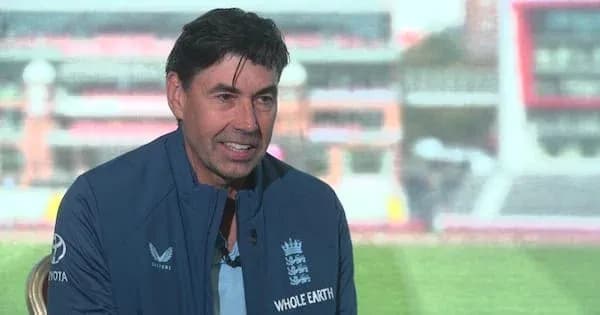
Stephen Fleming has never been one to chase the spotlight. Yet here he is, stepping into the most scrutinised job in world cricket – England Men’s Test head coach – and calling it an opportunity “too good to refuse”.
For a proud New Zealander, the lure ran deeper than a title or a paycheque. It ran through the Ashes.
“New Zealanders love beating Australia so that doesn’t change,” he told 1News, half-grinning, half-bracing himself for what lies ahead. The idea of being in the thick of an Ashes series, he admitted, is a “highlight” he has to consciously “suppress” his excitement about.
From Black Caps legend to England’s new strategist
Fleming is no ordinary appointment. He is one of New Zealand’s great cricketing figures – the most successful Black Caps Test captain with 28 wins, a mainstay of their batting order, and the man who led his country for a decade from 1997 to 2007 before retiring from international cricket in 2008.
Now 53, he has spent the last 18 years shaping modern T20 thinking in the Indian Premier League, most notably as the architect behind Chennai Super Kings’ sustained success. When the England job opened, he had just walked away from that long IPL stint.
The timing was brutal.
“The job became vacant and it was probably three, four days which wasn’t a lot of time to process leaving one job after 18 years and look at another one,” he said. Yet the sheer weight of the role – and what it represented – forced a family summit.
They sat down. They talked it through. And something started to stir.
“When you soak it all in and get all the information and take your time with it, there was something that started to burn in the stomach and then that just grew the more information I had about the job, the people, talking to Brendon [McCullum] and understanding the challenges and also how good it has been and how much he’s enjoyed it, how tough it is so everything put on the table.”
That burn never went away. It became his answer.
Taking over a bruised, brilliant, battered team
Fleming walks into a dressing room under siege.
England’s men have been pummelled in recent months: a 4-1 Ashes defeat to Australia at the start of the year, then a 2-1 Test series loss to New Zealand in June. Brendon McCullum was sacked as Test coach in July, though he remains in charge of the T20 and ODI sides.
The turbulence hasn’t been confined to the field. Former captain Ben Stokes retired during the third Test against New Zealand and was stood down, along with a teammate, for the second Test while under investigation for breaking a midnight curfew. A string of alcohol-related late-night incidents has stained the team’s reputation.
Fleming doesn’t flinch from that reality. He calls the off-field behaviour “disappointing” and makes it clear there will be an education process to lift standards. For him, Joe Root – the 35-year-old ex-captain who led England from 2017 to 2022 – is the benchmark.
He likens Root to Kane Williamson: players who “epitomise everything great about how you conduct yourself by still being a great player”. That is the model he wants others to follow.
“There’s work to be done,” he says. But he won’t be policing bedtimes. There will be no new midnight curfews.
McCullum, Bazball and a delicate handover
The man Fleming replaces is not just a predecessor. He is a friend, a former teammate, and a business partner.
McCullum debuted for New Zealand under Fleming’s captaincy. The pair have remained close, and their conversations were central to Fleming’s decision to accept the England job – and will remain central as they now work alongside each other as fellow England coaches.
“It’s a challenge at times but he’s great,” Fleming said of McCullum. “He’s loved to bring his flavour to the England team and learning as well, so it’s not just one way traffic… he couldn’t have spoken more highly and endorsed it.”
McCullum, he added, was “heartsore” about losing the Test role but still strongly encouraged Fleming to seize the opportunity.
The hope is that their relationship will smooth the constant juggling act between Test, ODI and T20 cricket – resources, players, schedules, and egos all needing careful management.
“It’s nice to be able to have that friendly face with that professional slant to be able to achieve hopefully some great things,” Fleming said.
He is still finalising his own backroom staff and is giving nothing away publicly. What is clear is the pecking order between the old captain and his former understudy has become a running joke.
“I’m a little bit older than him so I’ll still be able to get the key guys although he’s now saying he got more experience so I’m second fiddle so we’ve got a little bit of a battle,” Fleming smiled.
On McCullum’s tenure, Fleming is unequivocal. He describes what McCullum and Stokes achieved in two years with their aggressive “Bazball” approach as “quite remarkable”.
“It culturally changed the cricket landscape,” he said. It began, fittingly, against New Zealand, when England beat the Black Caps at home in a series that made the world sit up. The courage of those two leaders, he insists, was “immense”.
Now, he believes, the game has caught up. The standards set by Bazball forced others to adapt, and that evolution meant the plan was “challenged” towards the end of the McCullum–Stokes partnership.
A Test purist returns to his first love
Some critics have questioned whether a coach steeped for nearly two decades in franchise T20 cricket is the right man to revive England’s Test side.
Fleming bristles at the idea that he is a short-form specialist.
“My DNA was playing in the whites and captaincy and the challenges and the rewards that came through having a great opportunity to captain New Zealand for so long so I was brought up in the red ball and learned the white ball,” he said.
“Franchise cricket’s been a big part of my life but the deep passion is really test cricket.”
He sees this move as a return, not a reinvention. His natural instincts, he argues, are better suited to the long game – to “substance and strategy” and the unique dynamic of a sport still captained “from the inside out”.
That means ensuring Root and the other leaders are “well equipped”, not just technically but tactically, emotionally and intellectually.
He wants to sharpen England’s cricket “smarts”, to build a side that can adapt when matches tighten and conditions turn hostile. For him, that is where the real joy lies.
“That’s strategy, that’s creating an identity piece, a belonging piece, some standards, and making sure that as a team no matter who you represent, that you’re representing it well.”
It is a philosophy forged in his Black Caps days and now exported to Lord’s.
The Kiwi mindset in an English cauldron
Fleming knows the question is coming: is a laid-back Kiwi really the right fit for England cricket right now?
He bats it away, saying that’s one for the England and Wales Cricket Board. The UK, he points out, is long used to foreign coaches in its major sports, especially football.
What he will bring, he insists, is a distinctly New Zealand mindset.
“We don’t have the resource that other bigger countries have, that’s not just in cricket, so what we do is we look outside the square and we squeeze everything we can out of the stone to make sure that we can compete on the world stage, that’s our DNA, that number 8 wire DNA that we pride ourselves on.”
That scarcity has shaped a generation of Kiwi coaches who think differently, value relationships, and refuse to waste what little they have.
“You can’t burn them in New Zealand if you haven’t got much resource,” he said of those relationships.
The response is to double down on what can be controlled: culture, standards, and actually living the values preached in team meetings.
His vision for England is blunt: he wants them to be the best Test side in the world. Nothing less.
“It is a challenge, it’s the pinnacle, there’s a lot of attention on this role in England and media has been talked about and that’s it’s all part and parcel of being in the privileged position of it.
“But yeah, I am confident there is room to move around and the cultural piece and that sense of belonging that these players are wanting to do.”
England now, not New Zealand
Some in New Zealand wondered whether Fleming might one day return to their set-up in an official capacity. He admits it is “always a consideration”, but this time the offer on the table came from England.
He is adamant the Black Caps do not need rescuing.
No, they’re too good. They’re set, they’re doing so well,” he said, stressing his “utmost respect” for what New Zealand have achieved and for the players he still knows well.
He has already missed England’s recent Test series against Pakistan due to commitments at home and still has commentary duties during India’s upcoming T20 tour of New Zealand. Once those are done, he says, he will be “in a position to give it everything”.
His first assignment as England Test coach comes in December, a tour to South Africa that stretches into early January. A stern, old-fashioned examination to start with. Just how he likes it.
Protecting the longest form
Fleming speaks with a sense of duty about the wider state of the sport. Test cricket, he knows, is under constant pressure from the shorter, louder formats that dominate television schedules and social media feeds.
“We have a responsibility to entertain and play the game well,” he said. The job, as he sees it, is not just to win but to make people care about five-day cricket again – or care more deeply than they already do.
He hasn’t yet allowed himself to dwell on the moment he will one day stand opposite his old team, the Black Caps, as England coach.
“Thankfully there’s two more years to get some performances under the belt and then we’ll come across that, but it will be a good battle.”
For now, his focus is narrower and sharper. Restore standards off the field. Rekindle smarts and steel on it. Harness the best of Bazball without losing the discipline of traditional Test craft.
He knows exactly what he has walked into. The scrutiny. The expectation. The noise.
And he has already set the bar: England, at the top of the Test world. Nothing about that sounds like a man who plans to die wondering.