Stephen Fleming's Mission as England Test Coach: Beat the Aussies
Stephen Fleming walked into his first media briefing as England Test coach with a simple mission statement.
“Beat the Aussies.”
No hedging, no softening. Just the old rivalry, front and centre.
A New Zealander, Same Old Obsession
Fleming knows exactly what he’s walking into. The Ashes dominate English cricket’s psyche, and he’s not trying to cool that fire. He’s pouring petrol on it.
Asked if England were too obsessed with Australia, he shot that down. New Zealand, he said, shares the same fixation. The “little cousin” desperate to bloody the big brother’s nose.
“We want to beat the Aussies,” he said, tying his own upbringing to England’s long-running feud. New Zealand, he pointed out, has long measured itself against Australia. Now he steps into a job where that rivalry defines careers.
The next Ashes come in the UK next summer. England haven’t won a series against Australia since 2015. They’re still carrying the scars of last winter’s 4-1 hammering down under. Fleming has barely unpacked and already that series looms over everything.
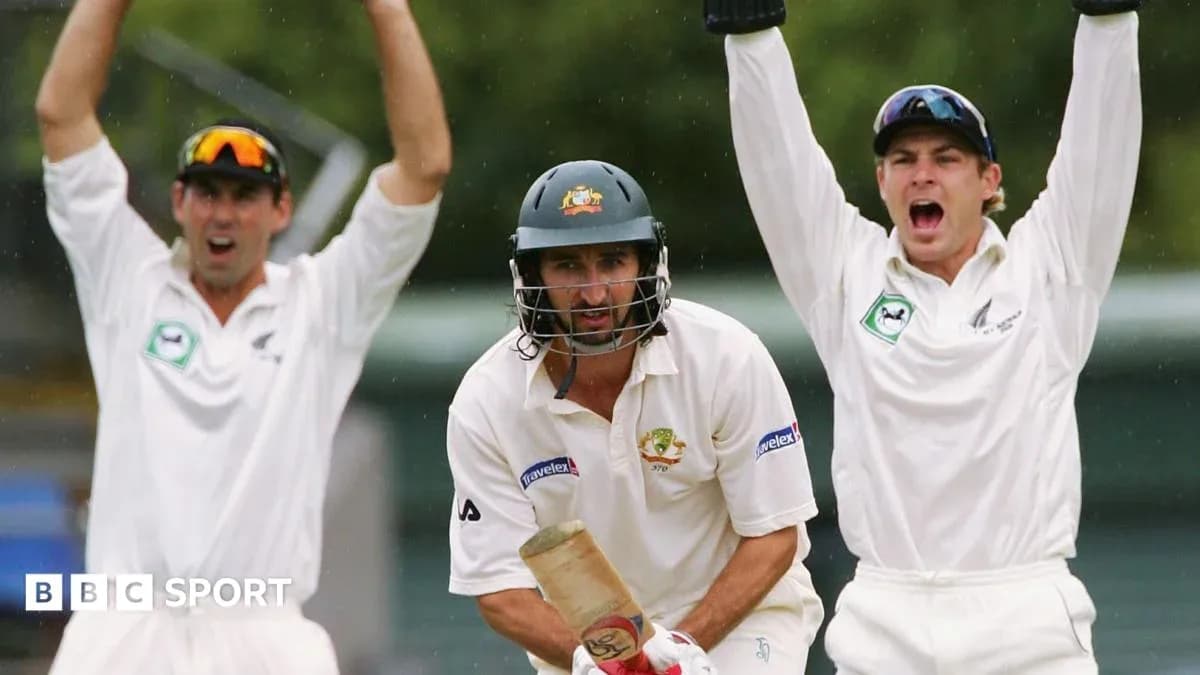
For him, it’s personal too. Across 14 Tests against Australia as New Zealand captain, he never once tasted victory. Now he has another crack at them, from a different dressing room.
“You don’t think you’re ever going to get that opportunity,” he admitted. Now he has it, and he “can’t wait”.
From McCullum’s Chaos to Fleming’s Control
Fleming replaces his close friend and business partner Brendon McCullum, sacked earlier this summer after a turbulent spell in charge of the Test side. McCullum remains in charge of the white-ball teams, but his red-ball tenure ended with only two wins in his final 10 Tests and that brutal tour of Australia.
The contrast between the two men was clear.
McCullum was all long shots and high stakes. Fleming summed it up himself: “I’ll bet on the favourite and he’ll bet on the longest odds possible.” England fans have seen what that looks like – audacious declarations, wild chases, a brand first, questions later.
Fleming doesn’t sound like a man who will coach by slogan.
On the idea of a Test “brand” or “style”, he was blunt. That’s not the point. The job, as he sees it, is to read conditions, play situations, and do the basics with ruthless clarity.
He wants England to be known for planning, discipline and a solid structure. Then, once that’s in place, add “a bit of flair” on top. Not the other way round.
It felt like a quiet resetting of the dial. Less noise. More method.
Standards, Not Just Stats
If McCullum’s reign was defined by noise on the field, the back end of it was dogged by noise off it.
Late-night drinking controversies followed England through the final months of his time in charge and even beyond the change of coach. On Friday, Derbyshire Police confirmed they had closed an investigation into England fast bowler Brydon Carse after allegations of an assault last month. No police action will follow, but Carse now faces an investigation from the Cricket Regulator and has not featured in any England squad since the incident.
Fleming did not name names, but his message on discipline was pointed.
“There are standards,” he said. Runs and wickets will still pick teams, but behaviour matters. Players, he stressed, occupy a “very privileged position” and can’t treat professionalism as something to switch on and off.
“You’ve got to live it every day,” he said. The implication was clear: those who don’t may find the door closed.
For Carse, and anyone else on the fringes, talk of “standards” will not feel like background noise.
Calm Voice After the Storm
If England’s recent Test journey has felt chaotic, Fleming’s first public outing was the opposite.
Calm. Measured. Authoritative.
He spoke of a vision that is “aspirational” but grounded. He wants a team that represents itself “in the best possible way”. There was no chest-thumping manifesto, just a coach who sounded like he has already spent a lot of time on the phone, listening.
He joked he has a “stress fracture of the left ear” from all the calls with players and staff. He laughed about occasionally turning up in fancy dress at Chennai Super Kings to loosen the mood. The humour was dry, not performative. The kind that tends to land in a dressing room.
The “big brother” label for his relationship with McCullum surfaced again. In a split-coaching model that has tripped England up before, their friendship and contrasting instincts might finally make it work. McCullum, the gambler, with the white ball. Fleming, the percentage player, with the red.
On this evidence, England have swapped freewheeling chaos for something more grown-up.
No Stokes U-Turn
One question hung over Fleming’s arrival: would he try to drag Ben Stokes out of his abrupt Test retirement?
The answer was short. No.
Fleming has history with Stokes from their time together at Chennai Super Kings in the IPL, but he refused to lean on that relationship. He said he has “too much respect” for Stokes’ decision to try to change his mind.
Stokes, he reported, is in a “great space”, happy, settled at Durham and focused on a winter with his family. Once a player retires, Fleming said, that call deserves “100%” respect.
It was another line in the sand. No emotional bargaining. No romantic recall. England move forward with those who are in, not those who were.
South Africa First, Australia Always
Fleming has already begun the groundwork. He watched England beat Sri Lanka in the third T20 at Old Trafford on Saturday. Earlier in the week he toured counties and met Stokes during Durham’s draw with Worcestershire. He missed the Pakistan series because of family and commercial commitments, but he is now fully in the building.
He also made it clear the World Test Championship will matter under his watch, a shift from some of England’s previous ambivalence. Every series, every point, every away tour will count.
The first real test comes in South Africa in December. That’s where the new standards, the new structure, and the quieter, sharper edge will be judged.
But in the background, always, sits Australia.
Fleming never beat them as a player. England haven’t beaten them in a series for nearly a decade. Next summer, in English conditions, with a new coach who shares the same old obsession, that story gets another chapter.
If his England side are as disciplined and relentless as he sounds, those long odds his old mate McCullum loved might finally start shortening.