Steve Smith's Return to South Africa: A Journey of Redemption
Steve Smith walks back into South Africa this week carrying more than a bat and a reputation for run-scoring. He carries a scar.
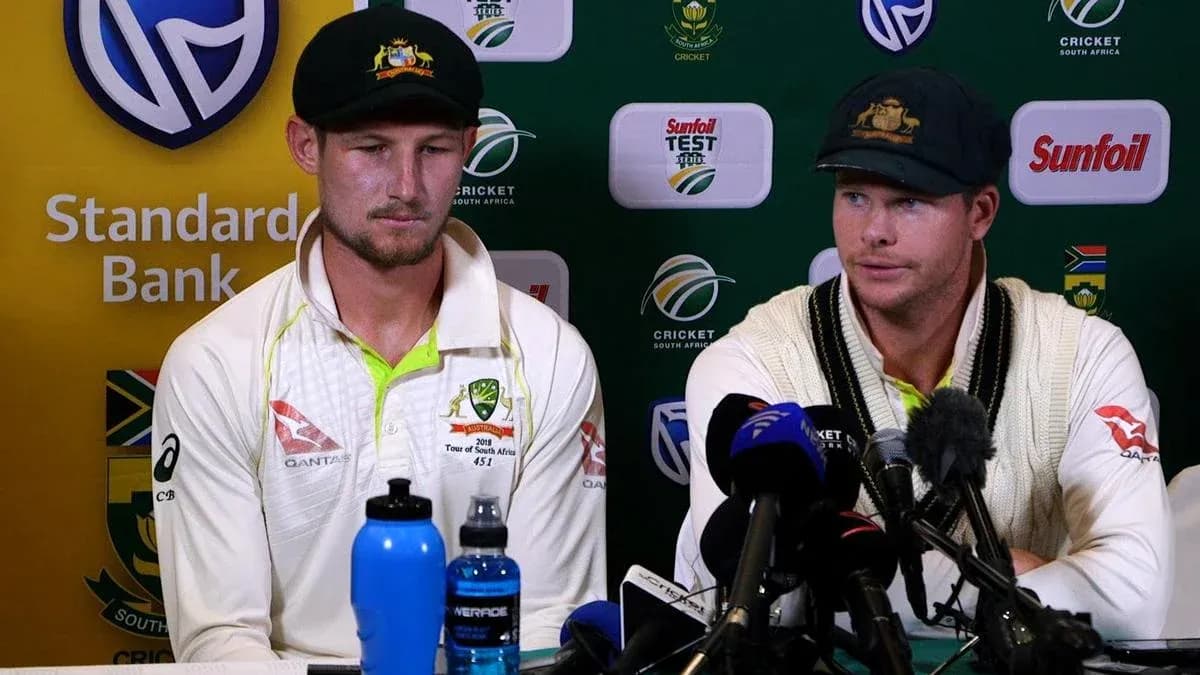
This is Australia’s first Test series here since sandpapergate, that extraordinary, tawdry afternoon in Cape Town in 2018 when a piece of yellow paper turned into a national inquest. Back then Smith was captain, David Warner his vice-captain, Cameron Bancroft the junior partner handed the sandpaper and the risk. The laws of the game were clear. The decision to break them was, too.
The bans that followed were brutal by cricket standards. Smith and Warner were thrown out of the game for a year, Bancroft for nine months. Careers paused, reputations shredded, a dressing room culture dragged into the light. Now, with Smith admitting he was “traumatised” by the reaction to his cheating, the story has taken a curious turn: from what he did to what it did to him.
Hero’s numbers, villain’s baggage
When Smith returned to Test cricket at Edgbaston in 2019, he walked into a storm. Booed from the moment he appeared on the balcony, mocked by songs and signs, he responded with one of the great Ashes performances of the modern era.
He made 144 in the first innings, 142 in the second. Same match, same hostility, same unflinching concentration. Across the series he piled up 774 runs, batting as if the rest of the world did not exist. It was a tale of guts and gumption, a master batsman treating chaos as background noise.
Was that the beginning of redemption, or the last chapter in a story that can’t quite be redeemed? The numbers scream greatness. Among players with over 10,000 Test runs, no one has a better average. For a long time he lived above 60, a territory previously reserved for Don Bradman. Yet the stain on his record doesn’t wash out with hundreds.
Warner’s path has been more jagged. In that same Ashes series he scraped together 95 runs in 10 innings, dismissed seven times by Stuart Broad, reduced almost to a walking wicket. Then, against Pakistan, he erupted for an unbeaten 335, the highest score by an Australian in that fixture. The public story, though, split sharply.
As Geoff Lemon, who chronicled the scandal in book form, put it, “Public opinion firmly settled on Warner being the criminal and Smith the innocent bystander.” One the schemer, the other the prodigy who looked away.
The reality, as always, is less convenient.
Self-obsession, self-awareness
Smith’s batting has always bordered on obsession: the tics, the rehearsed leaves, the endless shadow strokes. That same intensity shaped his leadership. He was at the centre of a team encouraged to believe that winning justified almost anything, a culture fed by a board that saw victory as a direct line to ratings, crowds, sponsorships, money.
The entitlement that led to sandpapergate did not appear overnight. It was cultivated, rewarded, normalised. Everything was tolerated until the one act that could not be.
Cricket writer Gideon Haigh captured the surreal nature of that day and its aftermath. “What is extraordinary,” he said on television, “is how it was done and how easily it was agreed to by the team and how, not unapologetic, but sort of oblivious to the consequences Smith and Cameron Bancroft seemed to be at the press conference.” Oblivious is the word that lingers. Not just to the rules, but to what breaking them would do to the game, to their teammates, to themselves.
That same press conference gave us another revealing line. “I was thrown to the wolves,” Smith complained, framing himself as a victim at the very moment he sought sympathy for his personal trauma. The phrase jars when you remember he had asked a younger player to carry out the dirty work in the first place, a delegation of risk that looks less like leadership and more like evasion.
The gap between self-obsession and self-awareness rarely feels wider.
The game, the ‘spirit’, and the cost
Strip away the emotion and cricket is just a game, an elaborate human invention onto which we project values: fairness, courage, restraint, honour. Because it is artificial, we can demand higher standards from it than from the messy world outside. We can insist that behaviour on the field meets ideals we know are rarely met in politics or business.
Yet sport itself is morally neutral. A cover drive has no ethics. The players do. Cricket’s need to bolt on a “spirit of cricket” preamble to its laws tells its own story. The unwritten codes that once governed behaviour were being pushed, bent, and exploited too often. The pride of the game, its supposed essence, needed a legal wrapper. That says more about the times, and the players, than about the bat and ball.
When the bans landed, many international cricketers felt they were cruel. They pointed to the so-called “Australian way” – the hard-nosed, line-pushing mentality – and argued that the system itself should share the blame. Trevor Chappell knows what it is to become a symbol for something darker than a single act.
Vilified for bowling under-arm to a New Zealand batter to deny a last-ball six and prevent defeat, he has worn that infamy for nearly four decades. “(Smith and the others) will struggle for the rest of their lives,” Chappell said. “I haven’t been able to shake off what happened to me in 37 years. I come up on Google as the man who took the lead role in Australian cricket’s darkest day. It’s a relief I can finally drop that title.”
The title, in the public mind, now rests with Smith and Warner. The question hangs there: who will eventually take it from them?
Punishment that doesn’t end
Time has already softened some edges. When Smith returned to South Africa for a white-ball tour, the reception was surprisingly mild. No cauldron, no sustained fury. A few jeers, some pointed reminders, but nothing like the hostility he had faced in England.
Yet he knows – and every step onto a foreign ground reminds him – that the jeer is always ready. One chant, one sign, one mocking chorus can drag him straight back to Cape Town. That is the punishment that doesn’t appear in any ICC code of conduct or Cricket Australia statement. It is not a ban you can serve and tick off.
Every player deserves a second chance once the formal debt is paid. Even those who argued for life bans at the time, in the heat of outrage, have since looked at the bigger picture and recognised the limits of sporting justice. Cricket, for all its lore and language, remains a game.
But games leave marks. For Smith and Warner, the runs will keep coming, the milestones will stack up, the records will be recited. The boos will fade, but they will never disappear entirely.
The real test now is not whether they can bat through another hostile spell. It is whether, years from now, their names evoke greatness first and scandal second – or whether sandpaper will always come before the cover drive.