Vaibhav Sooryavanshi: A 15-Year-Old Cricket Prodigy in the Duleep Trophy
At 15, Vaibhav Sooryavanshi should still be learning the rhythms of senior cricket. In the Duleep Trophy final in Chennai, he was dictating them.
On a day when East Zone’s towering 708 looked like it might be blunted by South Zone’s resistance, the vice-captain’s mind worked faster than many of the seasoned professionals around him. Two moments, both wrapped around the thin line of technology and instinct, swung the contest harder in East’s favour.
A teenager’s call, a big wicket
The game had settled into that dangerous lull. South Zone, under the weight of Ishan Kishan’s monumental 270 and East’s 700-plus, were starting to look comfortable in reply. Then Mukesh Kumar angled one down the leg side to Ricky Bhui. A faint sound, a half-appeal, an unmoved umpire.
Most players were ready to move on.
Not Sooryavanshi.
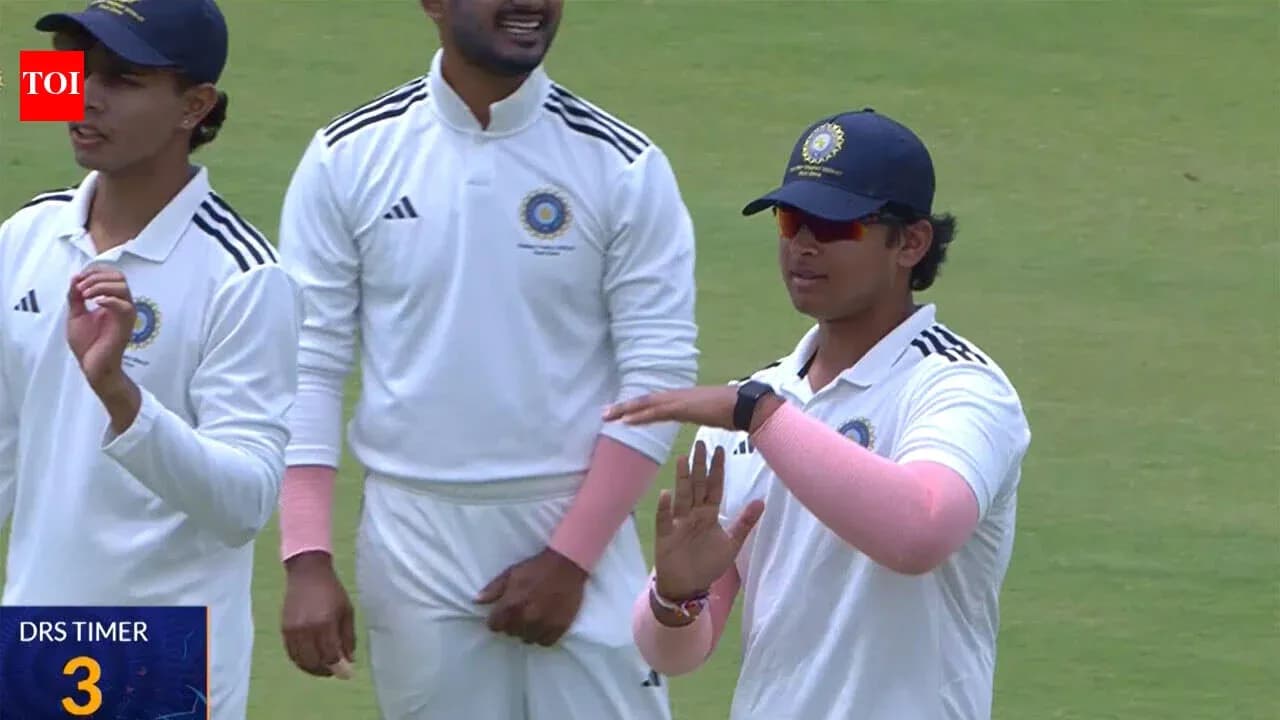
Stationed in the infield, the 15-year-old was adamant. He urged Kishan to go upstairs, his insistence cutting through the uncertainty that usually follows a marginal call. The captain backed his deputy. The review went up.
UltraEdge told the rest of the story. A clear spike as the ball brushed the bat, wicketkeeper Kumar Kushagra completing the catch. Bhui, who thought he had survived, had to go.
The Board of Control for Cricket in India picked up on the moment, posting the clip with the caption: “Take it... take it. Vaibhav Sooryavanshi urges the captain to take the review, and it turns out to be successful.” It was more than just a nice social-media moment. It was a glimpse of a teenager reading the game with the clarity of a veteran.
Standing in for Kishan, thinking like a captain
The afternoon session moved on. South Zone tried to rebuild. East Zone kept probing. Then came another small but significant twist: Kishan walked off the field just before tea, and the vice-captain suddenly had the reins.
South were 174 for 4. The interval was minutes away. Many young stand-ins would have simply rolled through the existing plan. Sooryavanshi did the opposite.
He turned to Mohammed Shami.
The senior quick had already put in a demanding shift. Seven overs in his first spell, more work after lunch, even a visit from the physio for neck treatment. Conventional thinking might have kept Shami in cotton wool until after tea.
Sooryavanshi saw a window.
One short, sharp burst from his most experienced seamer before the break. One last crack at a new batter’s concentration. Shami took the ball.
The impact was instant. Smaran Ravichandran, the leading run-scorer in the previous Ranji Trophy season, chased at a ball outside off and nicked it. Once again, the umpire stayed silent. This time it was Kushagra who pushed for the review, and Sooryavanshi who had to make the call.
He backed his keeper. UltraEdge backed them both.
The spike flashed on the screen, Ravichandran departed, and South Zone slipped to 176 for 5. In the space of a single session, the 15-year-old had directly shaped two of the final’s most important wickets — one with his reading of a faint edge, the other with his sense of timing and bowling changes.
Not a one-off: a pattern of sharp calls
This wasn’t some lucky streak confined to a high-stakes final.
In the semifinal against Central Zone in Bengaluru, Sooryavanshi had already shown the same conviction. Aryan Juyal, on 46, pushed hard at a delivery from Mukesh Kumar outside off. East Zone went up in a chorus of appeals. The umpire said no.
Doubt crept in. Fielders hesitated. The clock on the Decision Review System ticked down.
Sooryavanshi cut through the noise. At the last moment, he signalled for the review. Once more, UltraEdge revealed a decisive spike. Juyal was out, and East Zone had prised open a key partnership because a teenager refused to be paralysed by uncertainty.
Three big reviews in one campaign. All correct. All at important junctures. For someone still in his mid-teens, that is not just impressive; it is unusual.
More than a prodigy with the bat
Much of the early noise around Sooryavanshi has centred on his batting, and with good reason. His runs have pushed him quickly into the conversation as one of Indian cricket’s most exciting young prospects.
Yet this Duleep Trophy run has showcased a different dimension.
He has spoken with a light touch about his bowling, joking in a BCCI Domestic video that he sees himself as a “wicket-taker”. “Opponent team's wickets weren't falling, so I was asked to bowl two or three overs. Ishan Bhaiya felt like he was taking a risk, but he didn't know that I am a wicket-taker,” he said, half-laughing, half-declaring intent.
The line sounded playful, but the mindset behind it is serious. He wants the ball. He wants responsibility. And he wants the big decisions.
In Chennai, that attitude translated into action. He read edges others weren’t sure about. He summoned Shami at exactly the right time. He handled the DRS with the calm of someone who has been doing this for years.
For East Zone, that meant wickets and control in a final. For Indian cricket, it raises a more tantalising thought: if this is how a 15-year-old runs a field and a review system, what happens when he grows into the full weight of his game?