World Test Championship Stays at Nine Teams as Expansion Efforts Stall
The World Test Championship is poised to shut its doors on expansion for another five years, with the ICC board expected to back recommendations to keep the competition at nine teams through to 2031.
What has been a simmering argument for years reaches a decisive moment at an all-day board meeting in Bali on Sunday. The signs are clear: the existing structure is likely to survive the latest challenge.
This is the back end of the WTC’s fourth cycle, and the format has rarely been out of the firing line. Ideas have come and gone – including a mooted two-tier league – but the most serious recent push was for a full 12-team competition in a single division, giving every Full Member a place at the table.
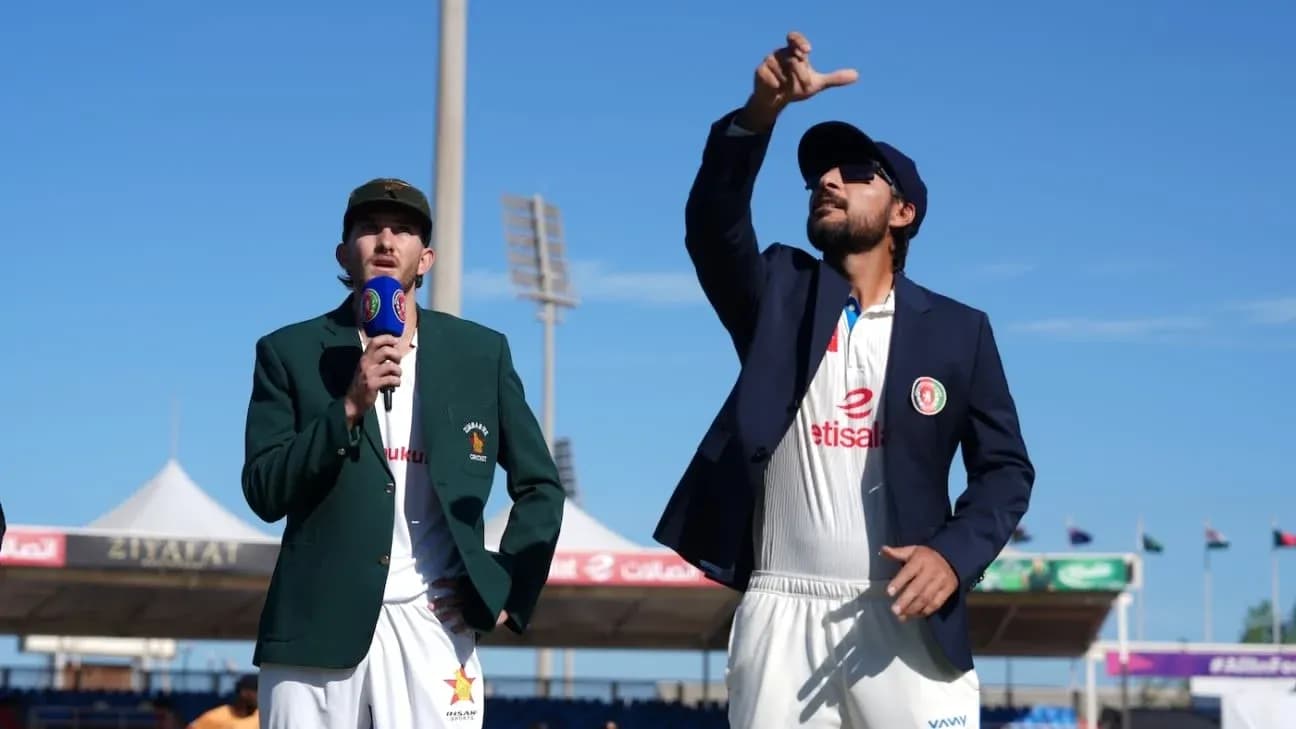
That proposal, driven by an ICC working group headed by former New Zealand batter Roger Twose, gathered real momentum over the past year. It had loud backing from Zimbabwe, Ireland and Afghanistan, the three Full Members currently locked out of the WTC.
For them, this is not a theoretical debate. They argue their Test programmes are being strangled by exclusion, their development hampered by a lack of meaningful, structured red-ball cricket. Without promotion and relegation, they have no pathway into the top nine. Just locked outside, watching the door.
Those frustrations spilled into the open on Saturday. The Chief Executives’ Committee meeting in Bali ran for more than four hours and turned into a robust, at times emotional, discussion. Officials from Zimbabwe, Ireland and Afghanistan made impassioned pleas, warning that without WTC status their Test ambitions risk fading into token fixtures and one-off occasions.
They were not alone. Cricket South Africa is understood to have strongly favoured expansion, with chief executive Pholetsi Moseki delivering what amounted to a rallying cry in support of a broader competition.
Yet the numbers – and the doubts – keep biting. The WTC remains a league built on bilateral scheduling, with only the final run centrally by the ICC. That means any expansion must convince members it will generate enough commercial value to justify extra tours, extra travel, extra broadcast commitments. For now, too many boardrooms remain unconvinced.
The positions of two of the game’s power brokers, the BCCI and Cricket Australia, have stayed largely opaque. Their silence carries weight. England’s stance is easier to read. The ECB has shown a willingness to stage one-off Tests against Zimbabwe and Ireland in recent years, but when it comes to a full WTC expansion, the board is believed to be wary of the financial and logistical load.
That tension is captured in one upcoming series. The ECB and Zimbabwe Cricket are close to finalising England’s first tour to Zimbabwe in around three decades. Initially pencilled in for 2028, it is now set for 2030 and is expected to include a Test at Victoria Falls. A landmark event, rich in symbolism, but still sitting outside the WTC structure that Zimbabwe so desperately wants to join.
For those pushing reform, Sunday in Bali has the feel of a last stand. They know the mood music. They are braced for disappointment.
There is, at best, a sliver of hope. One compromise idea – a 10-team WTC – has been floated, with Zimbabwe’s strong appetite for Test cricket held up as evidence that an extra slot could be justified. They played 10 Tests in 2025, though that schedule has shrunk to just two this year, underlining the fragility of their red-ball calendar without a formal league to anchor it.
While the WTC debate dominates the politics, the ICC’s gaze is also turning to a bigger question: what does the future of international cricket actually look like?
A strategic review of the global game, covering all three official formats, will be laid before the board in Bali. Global consulting firm McKinsey presented their findings on Saturday night, outlining scenarios and options that will shape how Tests, ODIs and T20Is coexist in an increasingly crowded calendar.
That long-term vision will take time to crystallise. The WTC decision will not. By the end of Sunday, the championship’s immediate future should be locked in.
For Zimbabwe, Ireland and Afghanistan, the answer may be brutally simple: keep waiting.